

Campus Ministries
When you become a Regent student, you join more than an academic community. You become part of a spiritual family. Students, professors and staff come alongside each other, supporting, encouraging and challenging growth in our relationship with God. A diverse community of people from many denominations, cultures, backgrounds and callings comprises the Regent family, all with an intentional focus on our shared Christ-centered values. That’s what makes us strong as we strive toward excellence in our studies, our work and our service to others.
Whether you’re studying online or on campus, you can find many ways to participate in the spiritual community at Regent. We invite you to experience the presence of God at Regent as you dive in fully to worship, pray, study, serve and connect. Explore Campus Ministries opportunities.
Regent University’s Campus Ministries prepares students for a transformative journey of spiritual growth and devotion to Jesus Christ. We cultivate a thriving, faith-based community that empowers emerging leaders, inviting you to discover God’s will for your life in an inspiring, Christ-centered environment.
Our vision is to be the catalyst that inspires every Regent student to live for the glory and kingdom of God. Our mission is to foster Christian community, cultivate spiritual growth, and equip Regent students to fulfill the Great Commission in every vocation. Through worship, discipleship, outreach, leadership development, and authentic community, our objective is to develop a leadership framework for accelerated spiritual growth that inspires a campus-wide culture of fervent devotion to Jesus Christ.
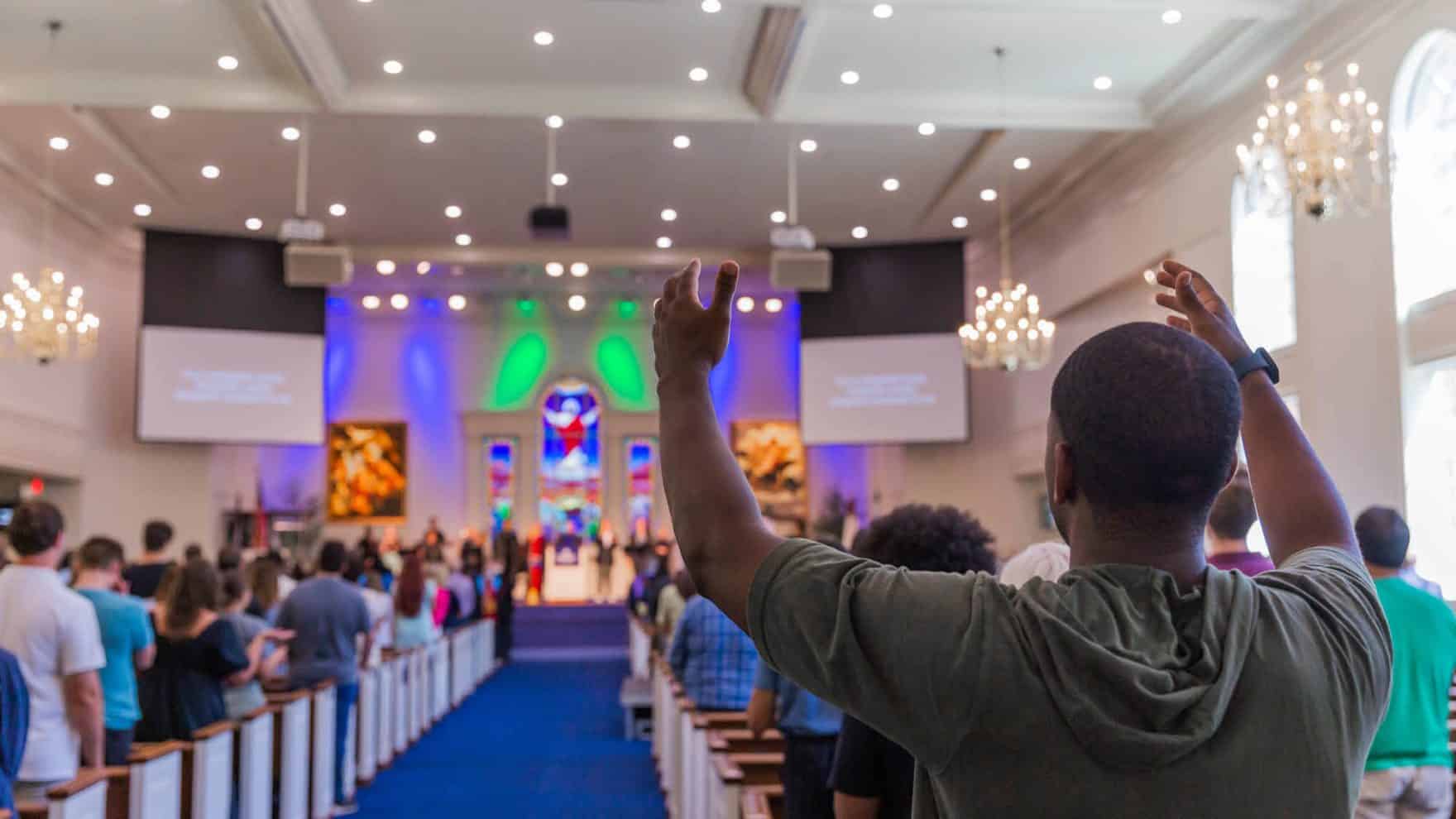
Join us every Wednesday at noon in Shaw Chapel for University Chapel. These gatherings feature passionate worship led by the CM Worship Team, Worship Choir, and Regent’s traveling worship team, Messenger. Students hear faith-building messages from pastors, professors, ministry leaders, and notable guest speakers designed to strengthen biblical conviction and inspire wholehearted devotion to Christ. University Chapel is a time for the Regent community to gather together in worship, prayer, Scripture, and spiritual encouragement in the middle of the week.
Every Thursday at 7:00 p.m. in Shaw Chapel, students gather for UnChapel—a relaxed environment designed especially for college students. UnChapel emphasizes extended worship, prayer, authentic community, and preaching from the CM Speaking Team and guest speakers. Whether students are exploring faith or passionately pursuing Jesus already, UnChapel creates space to encounter God personally and grow spiritually alongside others.
Community Groups are designed to foster authentic Christian community across campus. Groups meet every Tuesday night at 8:00 p.m. in every residence hall and provide students with a place to build friendships, study Scripture, pray together, and encourage one another in their walk with Christ. Online groups are also available for students studying remotely or living off campus. No matter where students are in their spiritual journey, Community Groups help create meaningful connection and spiritual growth within a supportive Christ-centered community.
The Discipleship Team is a leadership framework designed for accelerated spiritual growth and leadership development. The journey begins with the Forerunners, a discipleship-focused group that meets every other week for spiritual disciplines, evangelism, service opportunities, and Scripture discussion. In the second year, students may serve as Community Group Leaders or Breakout Leaders who facilitate weekly residence hall groups and small group discussions. Team Leaders provide mentorship, accountability, encouragement, and leadership support while helping Campus Ministries maintain excellence in discipleship and spiritual formation.
The CM Worship Team leads worship during all UnChapels and many University Chapels throughout the year. More than simply performing music, this team seeks to cultivate a presence-driven atmosphere where authentic worship and devotion to Jesus are prioritized above performance. Students involved grow spiritually and musically while helping lead the campus community into meaningful encounters with God through worship, prayer, and Scripture. Auditions are typically held during the Spring semester for students interested in serving on the team.
Serve Teams provide students with opportunities to minister behind the scenes during chapel services and special campus events. From hospitality and setup to media, production, prayer, and event support, students play a vital role in helping create welcoming and spiritually impactful environments for the campus community. Beyond serving, the team grows together through friendship, discipleship, and shared ministry experiences. Serve Teams are an excellent way for students to build community, develop leadership skills, and actively participate in what God is doing on campus.
Campus Ministries provides students with opportunities to serve locally and internationally through missions and outreach initiatives. International mission trips, such as the upcoming Mazatlán, Mexico trip in October 2026, allow students to share the gospel and serve communities around the world. Each Spring Break, students participate in the Homefront Mission Trip throughout Hampton Roads—including Virginia Beach, Norfolk, Chesapeake, Hampton, and Newport News. Students spend their days serving the unhoused, evangelizing, preparing meals, packing emergency kits, worshiping, practicing contemplative prayer, and building Christ-centered community. These trips are transformative experiences that deepen faith while blessing the surrounding cities and communities.

Paul Lackie
Executive Director, Campus Ministries
Pastor Paul Lackie is an ordained minister, teacher, trainer, and mentor with more than 25 years of experience equipping people to discover their God-given identity, purpose, and calling.
Pastor Lackie has served nationally and internationally in teaching, evangelism, leadership development, and spiritual growth. He has a particular passion for equipping believers to understand and operate in the gifts of the Holy Spirit and developing leaders who carry the presence and purposes of God into every sphere of influence.
Alongside his ministry experience, Pastor Lackie brings a strong background in business and organizational leadership, with experience in sales management and entrepreneurship. These experiences have strengthened his abilities in leadership development, team building, communication, strategic thinking, and organizational growth. Pastor Lackie is especially passionate about the next generation. He believes young people are not simply the future of the Church — they are an important part of what God is doing in the Church today. His desire is to create environments where anyone can encounter God, be discipled, discover their calling, and live out their faith with confidence.
Pastor Lackie and his wife, Ashley, have three children — Elisha, Samuel, and Tori. As a family, they are passionate about following Jesus and helping their children know God personally and walk in the gifts He has given them. Pastor Lackie and Ashley often say, “There is no junior Holy Spirit,” reflecting their conviction that children and young people can hear from God, encounter His presence, and participate in His Kingdom at any age.
Joy Windham
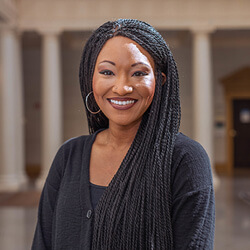
Joy is passionate about creating space for others to encounter the love of God and all that can be found in His presence. Worship and healthy discipleship are part of her love language, if there is one! She finds much joy, no pun intended, in partnering with the heart of God to awaken and affirm identity in Christ for each student she is blessed to work with. She has worked in Campus Ministries for ten years. Joy serves as the Assistant Director of Campus Ministries. She holds a B.S. in Psychology with a minor in elementary education. Joy is happily married to her husband, Rhett, of 16 years, and they have two amazing children, Ashlyn and Rhett-Zayne.

Gabby Oldham
After graduating from Regent in 2022, Gabby stayed to pursue her graduate education in psychology. She is passionate about journeying with others to know Christ deeply, encounter His transforming love and find wholeness in Him. Gabby serves as the Chapel & Administrative Coordinator and oversees Serve Teams. Her favorite parts of her job are journeying alongside students as they grow in Christ and connecting with ministry partners so they can glimpse the special transforming work God is doing in the lives of students at Regent. When she is not in school or at work, you can find her with her family or friends, enjoying rich conversations, researching international development topics, hiking, going on adventures, reading, or doing something creative.

Matt King
Matt is passionate about relationships, and it is what he believes is at the heart of discipleship to Jesus and with one another. Whether in a coffee shop, at the gym, or outdoors, discipleship can happen anywhere and that is where he desires to be. He has worked in local church ministry full-time for the last 8 years serving in student and young adult ministry. He holds a B.S. in Church Ministry with a focus in Youth Ministry and a M.Div. in Biblical Studies. Matt is happily married to his wife, Rachel, of over 3 years, and they are expecting their first child, a baby boy, in January of 2027.
The key to this question is understanding what “interdenominational” means in Regent’s historical and theological context. In the mid–20th century, a widespread movement of spiritual renewal touched Christians across many traditions—Protestant, Catholic, Orthodox, and evangelical alike. This renewal was often marked by a heightened emphasis on the work of the Holy Spirit, including practices and experiences commonly associated with Pentecostal and charismatic life.
Importantly, those involved did not generally leave their denominations to become Pentecostal. Instead, they remained within their historic traditions while seeking to interpret and embrace this renewal in continuity with classical Christian theology. What emerged has often been called “renewal theology”—an effort to account for the Spirit’s ongoing work without abandoning the doctrinal foundations shared across the church.
Regent University was founded within this stream of thought. Its interdenominational identity is not meant to signal theological neutrality on every issue, but rather a shared participation in this broader renewal that transcended denominational lines. In that sense, Regent is interdenominational because it draws from a moment when many traditions were experiencing similar emphases on the Holy Spirit.
As a result, Campus Ministries reflects forms of worship that are recognizably charismatic—not as a preference for one denomination over others, but as an expression of the theological movement out of which the university itself was born. At the same time, this does not negate the university’s commitment to welcome students from a wide range of traditions, including those who may understand or express the work of the Spirit differently.
Campus Ministries primarily uses contemporary worship songs because they are the songs most commonly sung across many churches and Christian ministries today. To help choose music that will be familiar to students from a wide variety of church backgrounds, Campus Ministries often looks at songs that are widely used through Christian Copyright Licensing International (CCLI), a licensing organization used by many churches that project song lyrics during worship.
Since Chapel and UnChapel are interdenominational gatherings, the goal is to select music that allows the greatest number of students to participate easily in worship together. Alongside contemporary worship songs, Campus Ministries may also include traditional hymns at times in order to honor the rich history of Christian worship and the enduring theological truths expressed in those hymns.
Campus Ministries encourages students to worship God with their whole selves. Jesus taught that the greatest commandment is to “Love the Lord your God with all your heart, with all your soul, with all your mind, and with all your strength” (Mark 12:30). Because of this, worship may involve not only our thoughts, but also our emotions and physical actions. For some people, this may include singing joyfully, raising hands, clapping, kneeling, or other outward expressions of praise.
At the same time, Campus Ministries recognizes that worship can also be quiet, reflective, and reverent. Scripture teaches both joyful celebration and reverent stillness before God. For example, Psalm 46:10 says, “Be still, and know that I am God,” while Ecclesiastes 5:2 encourages thoughtful reverence in God’s presence. Different Christians and church traditions may emphasize different expressions of worship, and Campus Ministries seeks to respect that diversity.
Because Regent is an interdenominational community, students come from many cultural and denominational backgrounds. Some forms of worship may feel very familiar to certain students and unfamiliar to others. Part of participating in a broader Christian community is learning to appreciate faithful expressions of worship that may differ from one’s own tradition.
Campus Ministries believes Scripture presents a wide range of worship expressions. The Psalms especially describe worship that includes music, singing, physical posture, and joyful praise:
“Praise the LORD with the harp; make music to him on the ten-stringed lyre” (Psalm 33:2).
“Shout for joy to the LORD, all the earth, burst into jubilant song with music” (Psalm 98:4).
“May the lifting up of my hands be like the evening sacrifice” (Psalm 141:2).
“Clap your hands, all you nations; shout to God with cries of joy” (Psalm 47:1).
“Let them praise his name with dancing and make music to him with timbrel and harp” (Psalm 149:3).
“Come, let us bow down in worship, let us kneel before the LORD our Maker” (Psalm 95:6).
The New Testament also describes expressive worship. Believers are encouraged to sing “psalms, hymns, and spiritual songs” (Ephesians 5:19; Colossians 3:16), and Paul speaks of praying with uplifted hands (1 Timothy 2:8). At the same time, Scripture teaches that worship should be done “decently and in order” (1 Corinthians 14:40).
For these reasons, Campus Ministries seeks to make space for multiple biblical expressions of worship while encouraging students to participate sincerely, thoughtfully, and in ways that honor Christ.
Regent welcomes students from many different Christian traditions and seeks to create a campus worship environment where believers from a wide range of backgrounds can gather together. Rather than organizing chapel services around individual denominations, Campus Ministries aims to focus on beliefs and practices that Christians across many traditions share in common.
Regent’s spiritual life is especially shaped by its evangelical and renewal heritage, which emphasizes the work of the Holy Spirit in the life of the Church and individual believers. Christians from many denominations have participated in and contributed to this renewal emphasis, and Regent desires to be a place where students from those backgrounds can worship and learn together.
At the same time, Regent recognizes and respects the rich traditions of historic Christian denominations, including those with more formal liturgical practices or distinct styles of worship. Students are encouraged to remain connected to their own church traditions and local congregations while also participating in the broader Christian community represented on campus.
Regent University and Campus Ministries believe that God calls and equips both men and women for ministry, including preaching and teaching, through the work of the Holy Spirit. This conviction is based on several biblical passages that describe God using women in significant leadership and ministry roles throughout Scripture.
In the Old Testament, women such as Miriam (Exodus 15:20), Deborah (Judges 4-5), and Huldah (2 Kings 22:14-20) served God publicly as leaders and prophets among His people. In the New Testament, women were also active participants in the ministry of the early Church. Priscilla helped teach Apollos, an influential preacher, more accurately in the faith (Acts 18:24-26). Phoebe is commended as a deacon or servant of the church in Cenchreae (Romans 16:1-2), and Junia is described by Paul as “outstanding among the apostles” (Romans 16:7).
Campus Ministries also points to passages that emphasize the Spirit giving gifts without distinction between men and women. At Pentecost, Peter quoted the prophet Joel, saying: “Your sons and your daughters will prophesy” (Acts 2:17).
Paul likewise taught that spiritual gifts are distributed by the Holy Spirit according to God’s will (1 Corinthians 12:4-11) and emphasized the unity and equality of believers in Christ: “There is neither Jew nor Greek, slave nor free, male and female; since you are all one in Christ Jesus” (Galatians 3:28 CSB).
Campus Ministries recognizes that some Christians interpret passages such as 1 Timothy 2:11-12 and 1 Corinthians 14:34-35 as prohibiting women from preaching or teaching in church. Others understand those passages as addressing particular problems within specific first-century congregations rather than establishing a universal rule for all churches in all times. Campus Ministries’ position follows this latter interpretation while acknowledging that sincere, Bible-believing Christians may disagree.
Because of this, Campus Ministries affirms women who demonstrate biblical character, sound doctrine, spiritual maturity, and gifting for ministry. At the same time, the university seeks to approach the issue with humility and respect toward denominations and churches that hold different convictions. Students from all traditions are welcomed and valued within the Regent community.
Campus Ministries values the faithful teaching of Scripture and recognizes that Christians and churches have used several different approaches to preaching throughout church history. Some churches primarily practice verse-by-verse exposition through entire books of the Bible, while others often organize sermons around important biblical themes or practical issues facing the church. Many ministries combine both approaches.
Campus Ministries generally uses sermon series that focus on biblical themes, questions, or areas of Christian life while still teaching specific passages carefully and in context. This approach fits the educational mission of the university and the unique season of life many students are experiencing. College and graduate students are often making significant decisions about vocation, relationships, spiritual growth, ethics, and calling. Campus Ministries seeks to address these issues directly through Scripture in a way that helps students develop a biblical worldview.
This approach reflects patterns found within Scripture itself. Jesus often taught thematically through parables and sermons addressing topics such as the Kingdom of God, prayer, money, discipleship, and faithfulness (Matthew 5–7; Luke 15). The apostles also addressed specific needs and questions within churches through their letters. For example, Paul wrote about unity, spiritual gifts, marriage, resurrection, generosity, and Christian conduct in response to situations facing the churches (1 Corinthians; Ephesians; Romans 12-15).
At the same time, Campus Ministries affirms the value of expository preaching and seeks to handle biblical texts responsibly and faithfully. Scripture teaches that pastors and teachers should “correctly teach the word of truth” (2 Timothy 2:15) and “preach the word” faithfully (2 Timothy 4:2). Whether preaching through a book verse by verse or addressing a topic through multiple passages, the goal remains the same: to teach God’s Word accurately and help people grow as disciples of Christ.
Campus Ministries is not a local church, but it does see itself as part of the broader body of Christ and seeks to provide opportunities for worship, discipleship, and spiritual growth on campus.
Christians have different views about who may administer baptism and communion. Some traditions believe these practices should only take place under the authority of a local church and ordained clergy, while many evangelical traditions believe they may also be celebrated within gathered Christian communities under qualified spiritual leadership. Regent’s practice reflects this evangelical and renewal perspective.
When Campus Ministries baptizes students, it understands baptism as an expression of faith in Christ and entrance into the universal Church—not membership in Regent University or Campus Ministries. Likewise, communion is practiced as a time of worship, remembrance, self-examination, and unity in Christ (1 Corinthians 11:23-29).
These ordinances are administered reverently and under the oversight of ordained Campus Ministries leaders or Regent faculty and staff.