

Skip navigation

Wide Awake: An Invitation to Christian Leaders to Awaken their Devotion to Spiritual Truth, to God, and to Others

Wide Awake: An Invitation to Christian Leaders to Awaken their Devotion to Spiritual Truth, to God, and to Others

Quiana Preston | 2018

Abstract

Believers in God want to flourish in an environment where a responsive and reassuring spiritual culture exists for them to learn from wise counsel, to grow in grace, and to apply teachable moments to their commonplace experiences. The nature of humanity is such that people in leadership often act in careless and callous ways toward others.

This book awakens the reader to some key features in Christian leadership behaviors as well as invites them to reflect on their personal commitment to lead individuals God’s way. The author challenges Christian leaders to think about what she views as the conspicuous decline of spiritual leadership. You will consider questions such as “How spiritual is my view of leadership?”, “What spiritual disciplines are important in building the capacity to learn and grow in God?”, and “How do I put others first when it counts the most?”

At the end of this book, readers will have reflected on some of the key features of how the American culture such as religious liberty has influenced Christianity over time. Keeping this influence in mind, readers will understand the responsibility of a spiritual leader in a secular world, and in spiritual formation activity. They will consider their devotion to truth, to God and to people as a Christian leader. They will recognize the virtue of empathy as the essential spiritual agent that helps Christian leaders to lead, relate to, and be sensitive to theirs and others imperfections.

Christian leadership is about God’s truth revealed, it is about building a strong relationship with God, and it is about extending grace and understanding to others.
JRTC & Fort Polk Campaign Plan 2027: Making Sense of the Amazingly Complex

JRTC & Fort Polk Campaign Plan 2027: Making Sense of the Amazingly Complex

Chad Roehrman | 2018

Abstract

Throughout history, armies have trained for the warfare in which they expected to engage. Unfortunately, as an interwar US Army lieutenant colonel aptly stated, we are good at planning for and training for the last war (Berman, 2013). In the 1940’s, the US Government acquired a large portion of western and central Louisiana to conduct large scale training exercises. These Louisiana Maneuvers prepared units for service in Europe during World War II. Currently, the Joint Readiness Training Center (JRTC) and Fort Polk, occupying a portion of the land used during the Louisiana Maneuvers, trains infantry brigade combat teams for current conflicts. However, in this hyperchange environment, the rate of change will continue to accelerate and the difference between past and future warfare will be more significant (Cornish, 2004). The present environment does not equal the future environment, therefore we must prepare for the future of warfare to enable future success.

Military technology and capabilities continued to develop over time, yet our shortsightedness results in both our inability to project and be prepared for the future and our inability to influence the future. The use of strategic foresight tools and methodologies, coupled with the military planning process, facilitate a greater understanding of the future to enable adequate preparation. The purpose of the two and a half day workshop is to ensure we are poised to train the future infantry brigade combat teams for future warfare. This workshop focuses four key areas of change impacting future warfare and the US Army: mass migration and mega cities, technological advancements and enhanced cognition, technology leadership fusion and artificial intelligence, and medical advancements improving soldier health and capability. Our understanding of the plausible futures sets us on the path to accomplish the long-term objectives. Ultimately, the benefit of the effort through the workshops is the future infantry brigade combat teams will be best trained to meet their future warfare requirements. They will be capable of winning in the increasingly complex world of the future.

After Sunday, Then What? Making a Difference in the Workplace

After Sunday, Then What? Making a Difference in the Workplace

Adrienne Ruffin | 2018

Abstract

After Sunday, Then What? Making a Difference in the Workplace is a practical guide designed to help business leaders discover who God is, what His purpose is for man, and how biblical and secular leadership insights can transform a leader’s approach to life, faith, and work.

In Part 1, Knowing God and Understanding His Plan for Work, we explore the power of storytelling and how it complements our framework for learning about God’s creative power and His attributes, which include self-existence, sovereign, all-knowing, holiness, and purposeful. We also examine the purpose of worship and work, and the attributes—including being made in God’s image and likeness, dominion, fruitfulness, relationship, and reflection and rest—which help man achieve his God-given purpose on the earth. This section also explores the consequences of man’s rebellion, and the impact of that rebellion on man’s relationship with God and the faith-work gap; the eternal gift of Jesus Christ as our bridge back to God; and our call to discipleship, including the biblical perspective of our vocation.

In Part 2, Leadership Lessons from Biblical Examples, we explore how the lives of biblical figures provide important leadership lessons that we can apply in today’s workplace. The Proverbs 31 Woman serves as an illustration of wisdom, and a model for successful business innovation. Nehemiah illustrates the important role a leader’s vision can play in creating and implementing organizational change. Joshua offers an illustration of courage as a leadership virtue, and how God prepares emerging leaders. Apostle Paul underscores the importance of understanding God’s purpose for our lives, and the global leadership competencies that can contribute to our success.

In Part 3, Moving Forward, we address the challenges and opportunities associated with leadership in today’s business environment, including the role of, and opportunity to integrate, Christian ethics and leadership in secular organizations. We also examine the human element of organizational life, and the three essential elements of organizational success: strategic leadership, strategy development, and a pro-active, transformational learning culture.

From Failing to Flourishing: Leveraging Intergenerational Leadership to Transform Christian Communities

From Failing to Flourishing: Leveraging Intergenerational Leadership to Transform Christian Communities

Arthur L. Satterwhite III | 2018

Abstract

An entire industry currently exists to create content that unpacks the Millennial generation and offer insight on how to lead them. However, what I have learned is that we are often asking the wrong questions about Millennials.

In truth, Millennials are not the issue. The question leaders must wrestle with is “how do we play nice with those who do not look, think, or believe like us?” And herein lies the problem. While the conversation around diversity is not new, it usually starts and stops with ethnic and gender diversity. My argument is that generational diversity is one of the most significant, yet under-appreciated, layers of diversity.

Furthermore, once we commit ourselves and embrace the generational diversity of our communities, the question we must wrestle with emerges: “How do I lead amidst the growing generational diversity?” For many Christian congregations, this question is central to whether they move from failing to flourishing. To survive their generational shifts, they need leaders who are willing to step out of their comfort zones and into the realities of those they are serve. Moreover, these changes will require leaders to consider new behaviors and develop new competencies that enable them to bridge the growing age divides within their communities.

Reacting to this reality and hours of research, through this work, I propose a brand-new model of leadership. Casting vision for what I have coined Intergenerational Leadership, in these pages, I architect a new theoretical framework; complete with the core competencies and common behaviors I have gleaned from interviewing a host of well-known, well-respected, and thriving Christian leaders. However, at its core, this new thinking is rooted in a straightforward idea: Leaders cannot lead those whom they do not understand. Applying a biblical context, you cannot disciple those you do not know.

FUNDTECH FUSION LEADERSHIP DEVELOPMENT SEMINAR

FUNDTECH FUSION LEADERSHIP DEVELOPMENT SEMINAR

Santie von Below | 2018

Abstract

Santie von Below developed the Fundtech Fusion Seminar Series coupled with a Trainer Manual to present participants with an understanding of leadership and the dimensions of culture, the unique cultural attributes for the Sub-Saharan Africa region, and how culture influences desired leadership attributes. The Fundtech Fusion Seminar Series expands on the international GLOBE study by strengthening leadership through creating awareness and understanding of how specific leader attributes can influence culture. The Fundtech Fusion Seminar Series can benefit leaders all over the world as they face the challenges of preventing and reducing culturally inspired conflict and strive to build relationships of mutual growth in a multi-cultural milieu. The Fundtech Fusion Seminar Series will also benefit missionaries to have a deeper understanding of the cultural thought processes of those that they are called to serve based on Matthew 28:18-20. The Fundtech Fusion Seminar Series can be presented at a venue of choice by contacting FUNDTECH CONSULTING at santievonbelow@gmail.com.

Millennial Leadership Development: Is Your Organization Ready?

Millennial Leadership Development: Is Your Organization Ready?

Kijuana Walker | 2018

Abstract

Millennial leadership development is important for organizations. Organizations must first know where they are going to have a great future. In an era of constant innovation, it is important to understand that the future of work in any organization will involve Millennials. After all, this generation will represent nearly 75 percent of the workforce by 2025.

The BIG question is how will your organization or church look in the future? How will your leadership team look? Will Millennials be groomed for the future? This seminar explores Millennial leadership development, in relation to organizational leadership strategy, strategic foresight, and coaching as a panoramic view to birth strategies to create brilliant and innovative organizations that grow Millennial leaders.

The true value of this seminar is coaching senior leaders to appreciate and envision the transformative impact that Millennials can contribute to organizations. This seminar offers the empowering steps and solutions to develop a Millennial leadership development framework, thus helping leaders to implement an effective Millennial leadership development plan necessary for progression and transformational success.

Strategic Tools for the Future of Biotechnology: A Toolbox for Industry Leaders

Strategic Tools for the Future of Biotechnology: A Toolbox for Industry Leaders

Leland Ward | 2018

Abstract

Change is inevitable whether slow and evolutional or sudden and revolutionary. While strategic planning based on traditional trend analysis is effective for evolutional changes, the more volatile and uncertain environment associated with revolutionary changes, require a different approach to future focused planning. Future focused strategies help organizations build resilience against the uncertainties and embrace the potential of diverse futures.

Today’s biotech industry exists in a volatile environment consisting of growing global competition, more restrictive regulation, and declining public opinion. It faces an increasingly uncertain future from ambiguous legal, political, and social pressures. Biotech leaders like many other leaders in today’s rapidly changing business environment, ready or not, are in need of new and innovative tools to develop successful future focused strategies.

This manuscript follows the Association of Professional Futurists’ six future focused competencies and demonstrates how biotech leaders might use them to manage specific future challenges and opportunities related to the biotech industry. The reader will learn how to use valuable future focused tools designed to help organizations navigate in just such a volatile and uncertain environment. They will learn about the history and scientific support behind these tools. Most importantly, the reader will learn what to expect from and how to navigate the natural human responses to the changes associated with implementing future focused strategies. By reading this manuscript, the reader will learn, while one cannot predict the future with any level of certainty, one can most certainly prepare for the uncertainty of the future.

Leadership: A High School Leadership Curriculum for Christian School Students

Leadership: A High School Leadership Curriculum for Christian School Students

Andrew Zawacki | 2018

Abstract

Christian schools are the perfect environment to teach high school students important concepts of leadership. This leadership curriculum is designed to help juniors and seniors in high school discover what Christian leadership is and what it is not. Important topics such as followership, organizational culture, leadership development, character development, and various types of leadership are integrated to give the student the opportunity to personally grow as a leader. Because of this course taught in the Christian school, the student should be more confident as a godly leader in their school and beyond. It was taught at Arborbrook Christian Academy during the 2017-2018 school year.

You Thought All Leaders Were The Same

You Thought All Leaders Were The Same…Until This Happened. Real-Life ‘Choose Your Own Adventure’ Case Studies

Bob Habib | 2018

Abstract

In today’s rapidly changing world, leaders and followers alike oftentimes find themselves in unpredictable situations. Like with most things in life, being armed with information often helps to better navigate challenges that come along, regardless of one’s ability to fully understand every aspect of the situation. Unfortunately, merely having information is not enough. Leaders must balance knowledge with wisdom and experience in order to maximize the propensity for success, regardless of the situation they find themselves in.

Based on the style of RA Montgomery’s Choose Your Own Adventure books, this manuscript provides real-life leadership scenarios, with real players, real possibilities and real potential outcomes and consequences. This book will help leaders at all levels better understand the nuances found between the most published best-practices of leadership and the lesser talked about leadership experiences and outcomes that cannot simply be found in a book. Interestingly, many times those two worlds do not intersect at logical junctures or times. The manuscript promotes engaging leadership discussions and reflections by using real situations but allows the reader to choose how the given scenario is resolved, or at a minimum, choose how they hope it would have turned out.

If there is one takeaway from navigating through the journeys found in this book, it’s this: There are no absolutes in leadership.

The E.R.M.A.H Facilitator

The E.R.M.A.H Facilitator’s Guide & Toolkit

Mariela Henry | 2018

Abstract

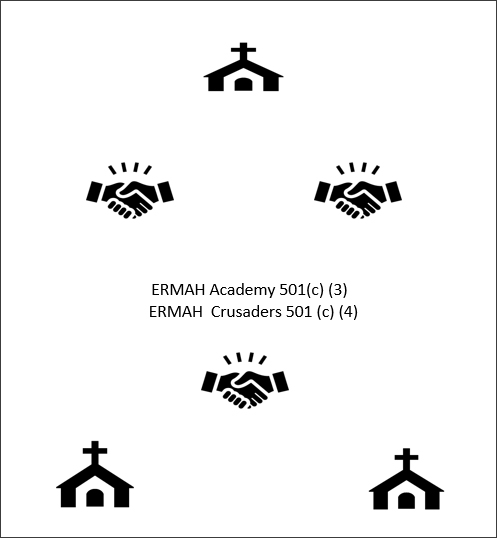
Global injustice and brutality in our modern time exist as an alarming epidemic of human rights violation against women and girls. The ERMAH Model entreats the Body of Christ to a multicultural, ecumenical, triadic partnership, which serves as intercessors and advocates of righteousness and justice on behalf of women and girls around the globe who endures trauma and violence against their very nature. The name Erma (ER-mah) is of German origin meaning- entire; complete and Universal. The Emancipating Restorative Ministry Advocate of Hope exists to serve and intercede for the wholistic restoration and empowerment of all women and girls who suffered from trauma and violence. The ERMAH Model Facilitator’s Guide and Toolkit exists as a multidisciplinary resource designed to equip Christian practitioners in the local church and abroad to unite as a strategic task force which serves as both a treatment and preventative response to trauma and violence against females. The ERMAH academy presents a three-year healing and recovery rite of passage academy for women and girls survivors of trauma and violence as a 501 (c) 3 nonprofit working alongside the ERMAH crusaders a 501 (c) 4 c a non-partisan non-profit organization that confronts the injustices and oppression of our time through the facilitation of grassroots servant leadership, mentorship, racial and gender reconciliation training and workshops.

An illustrated example of the ERMAH strategic task force can be located below:

ERMAH Strategic Task Force Illustration ERMAH Strategic Task Force Illustration

The way forward in this mission is together under the direction and leading of the Holy Spirit which resides within the beloved sons and daughters of God. Violence and assaults against women and girls are acts of violence and assault against humanity which must not be taken lightly or categorized as an isolated crisis. The leadership models presented in this facilitator’s guide and toolkit invites and challenges Christian leaders to examine themselves to see if they are living their faith out in the safety and security of their privilege or in the comfort and familiarity of their poverty, which both places are neither in the will of God for his servants.