Regent Undergraduate Debate Association (RUDA)
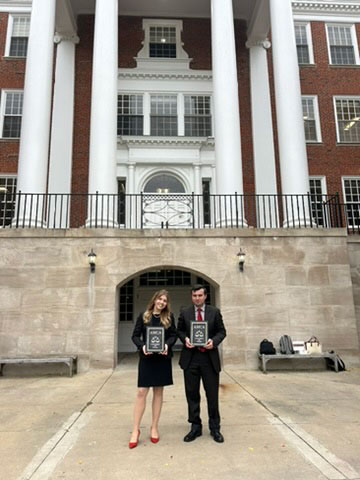
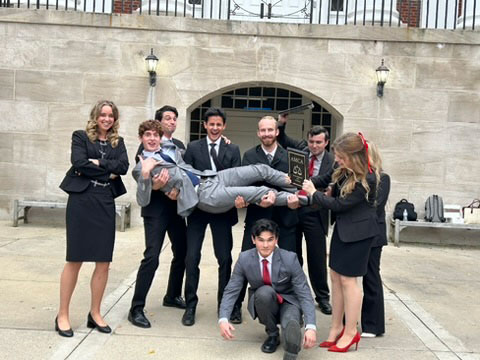
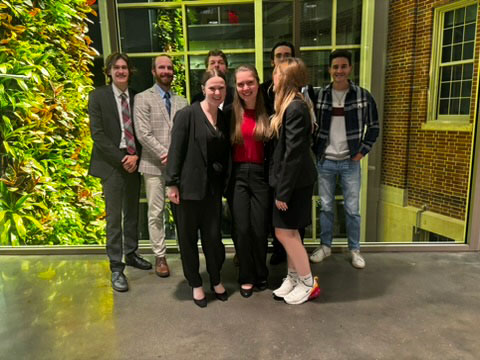
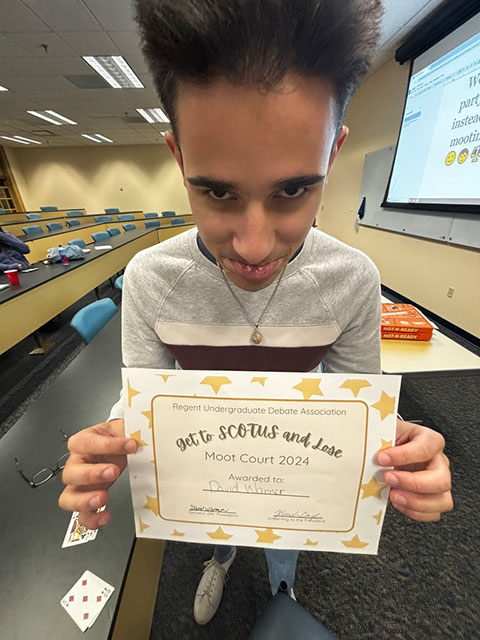
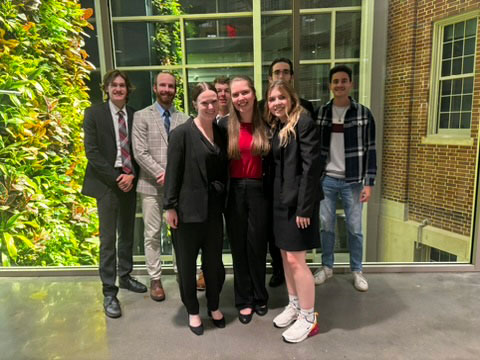
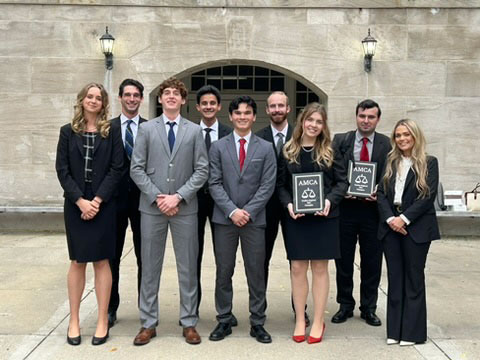
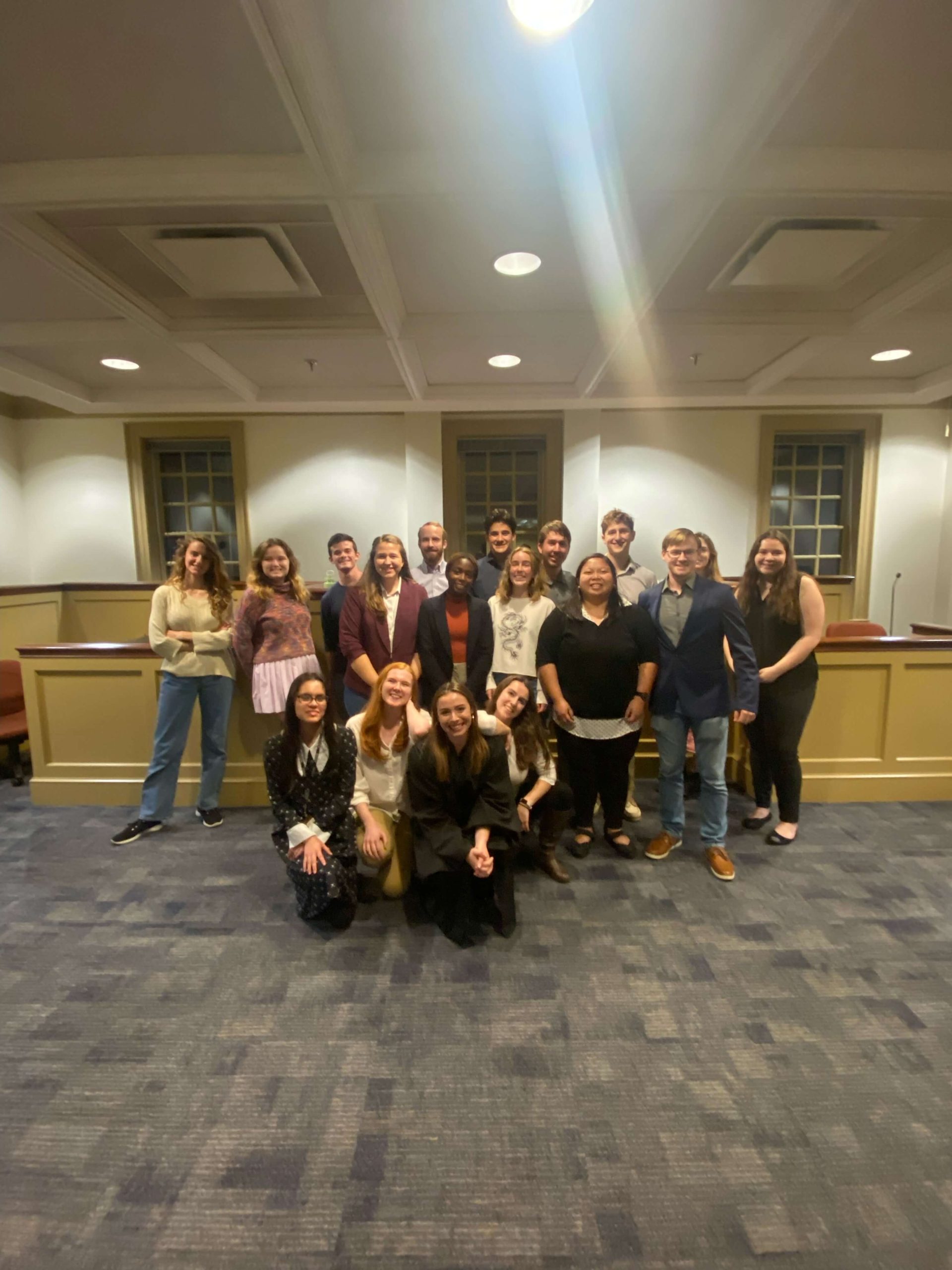
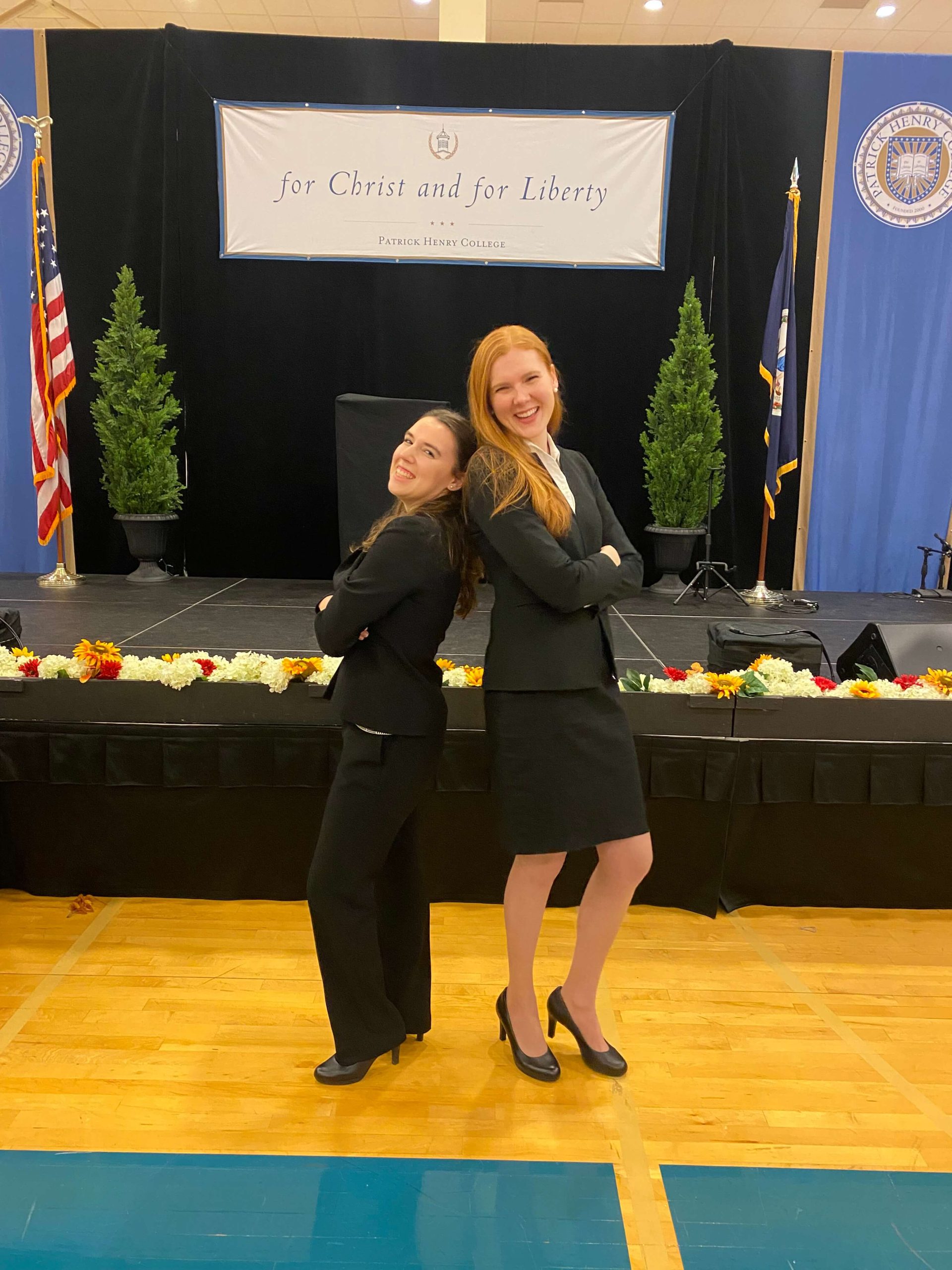
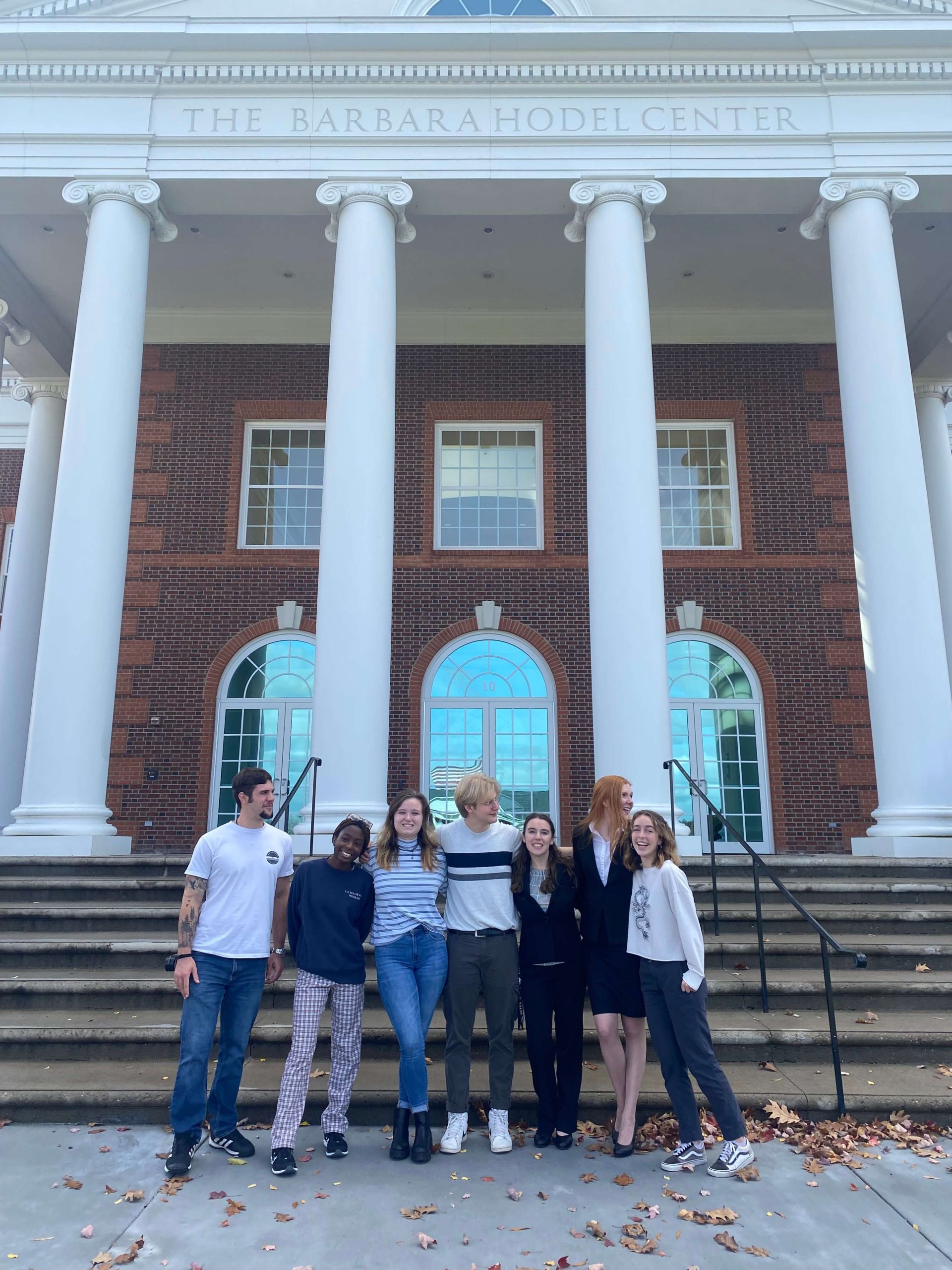
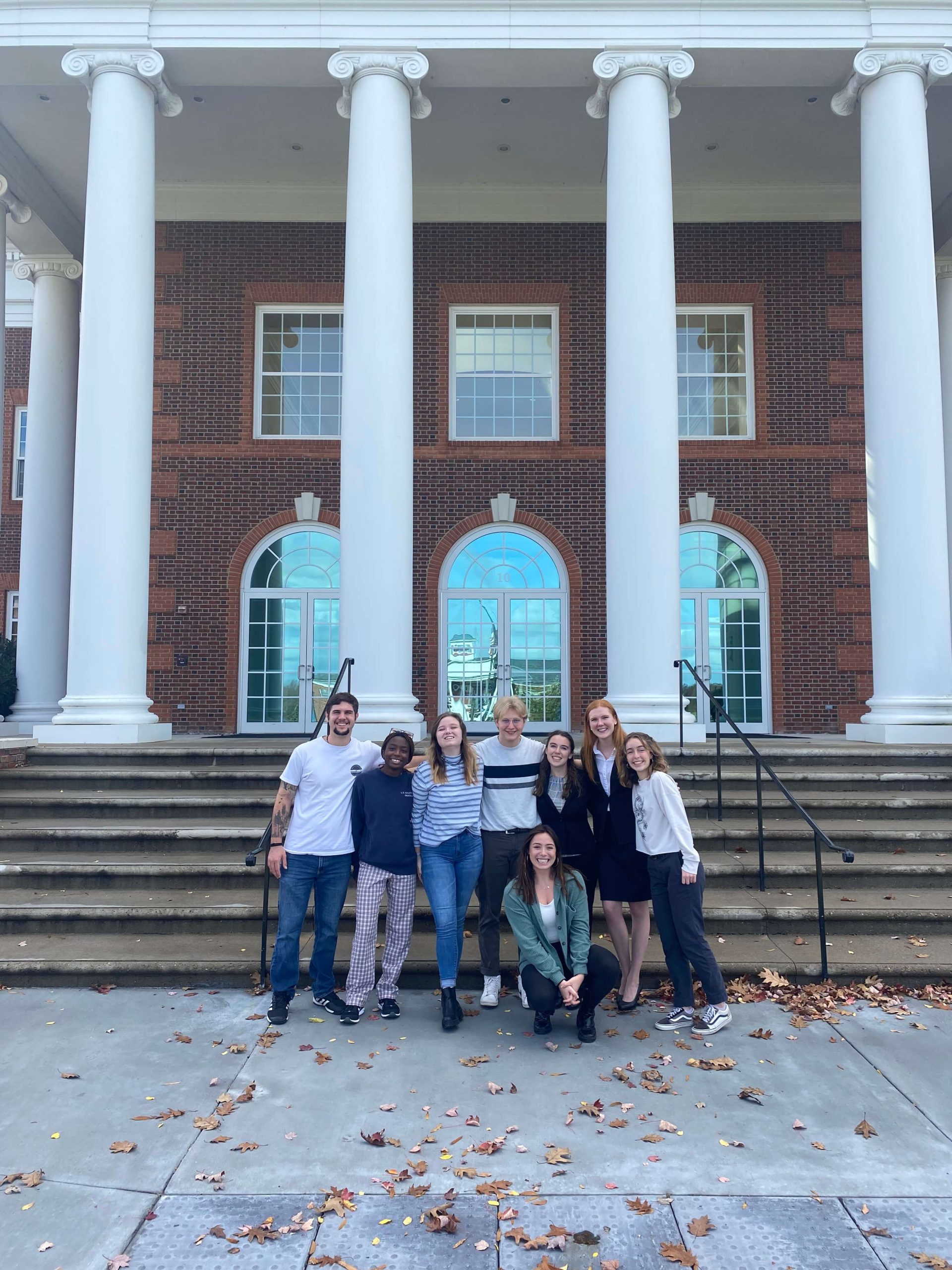
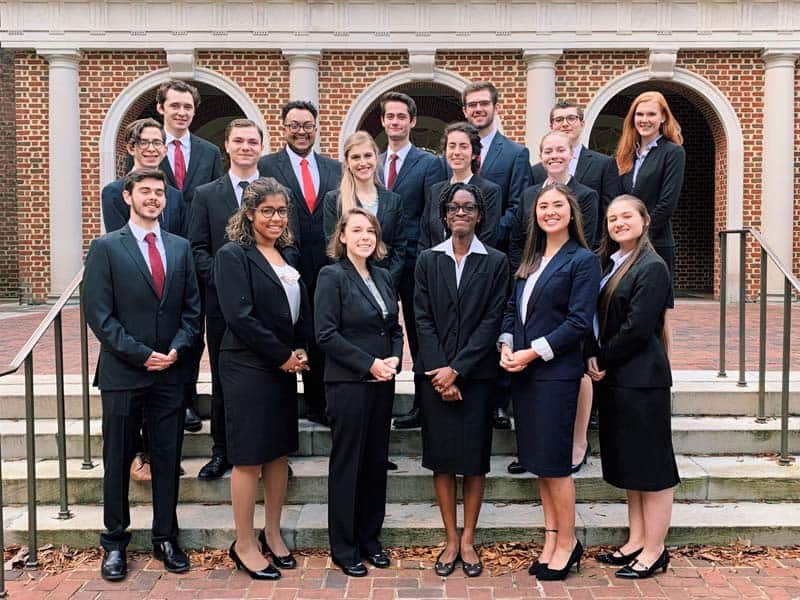
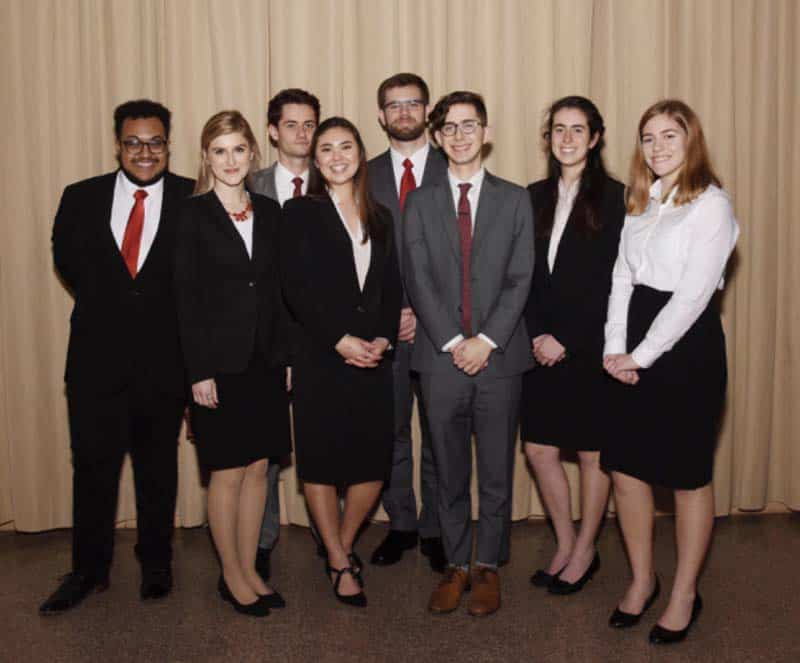
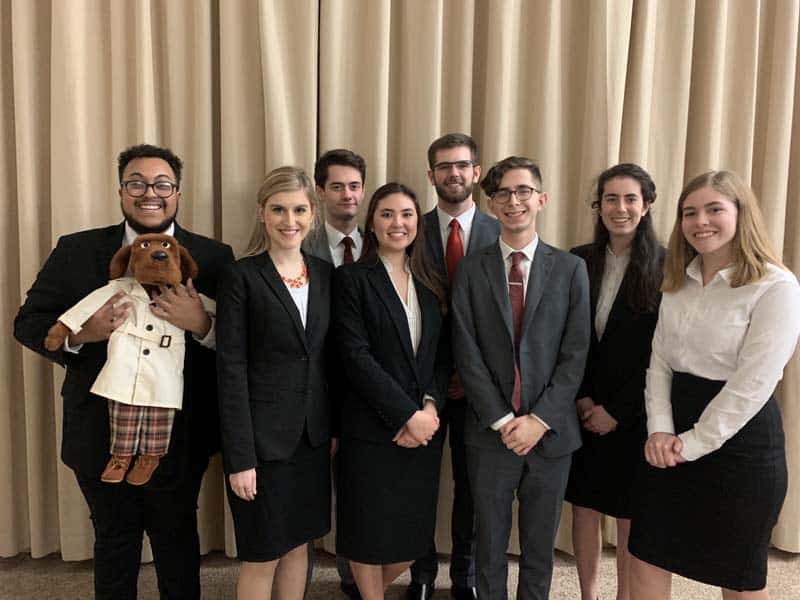
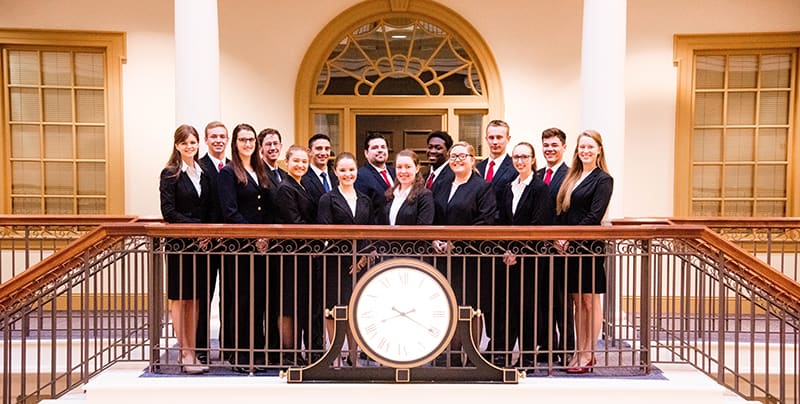
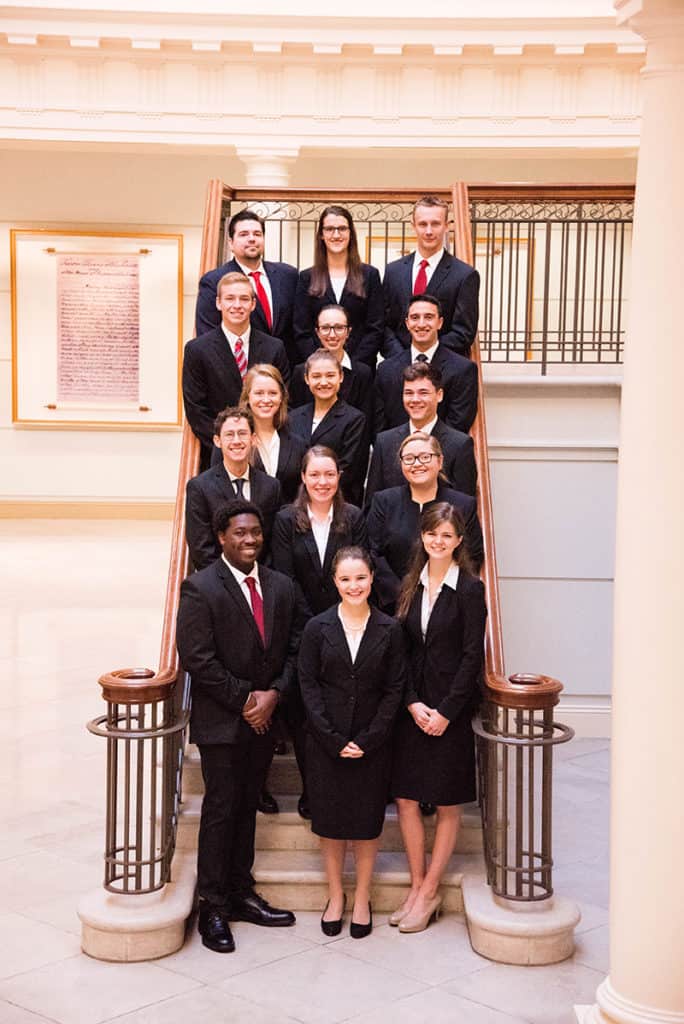
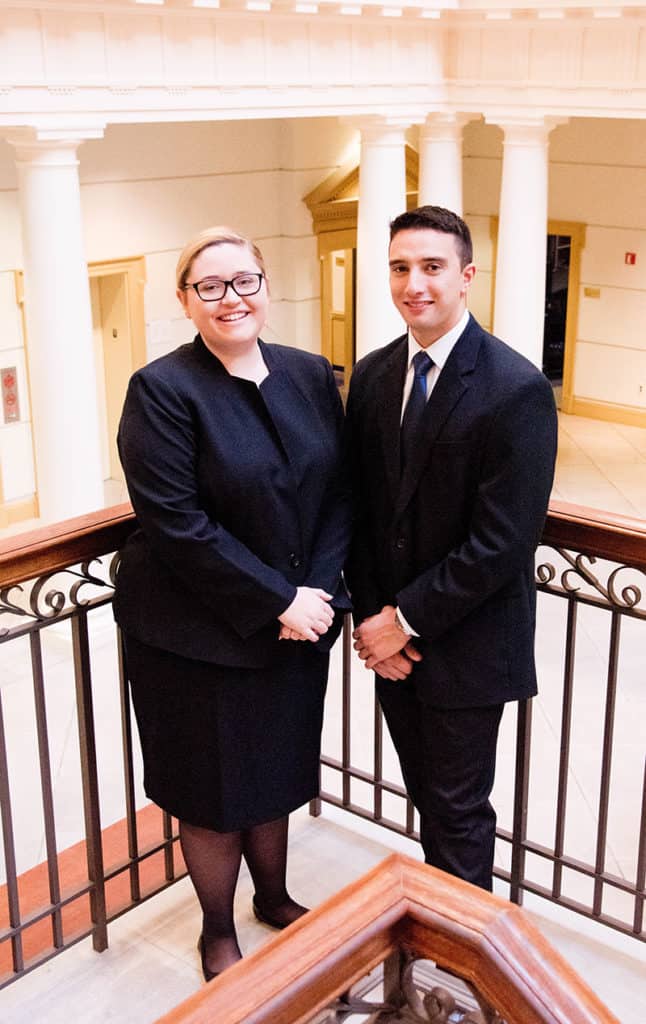
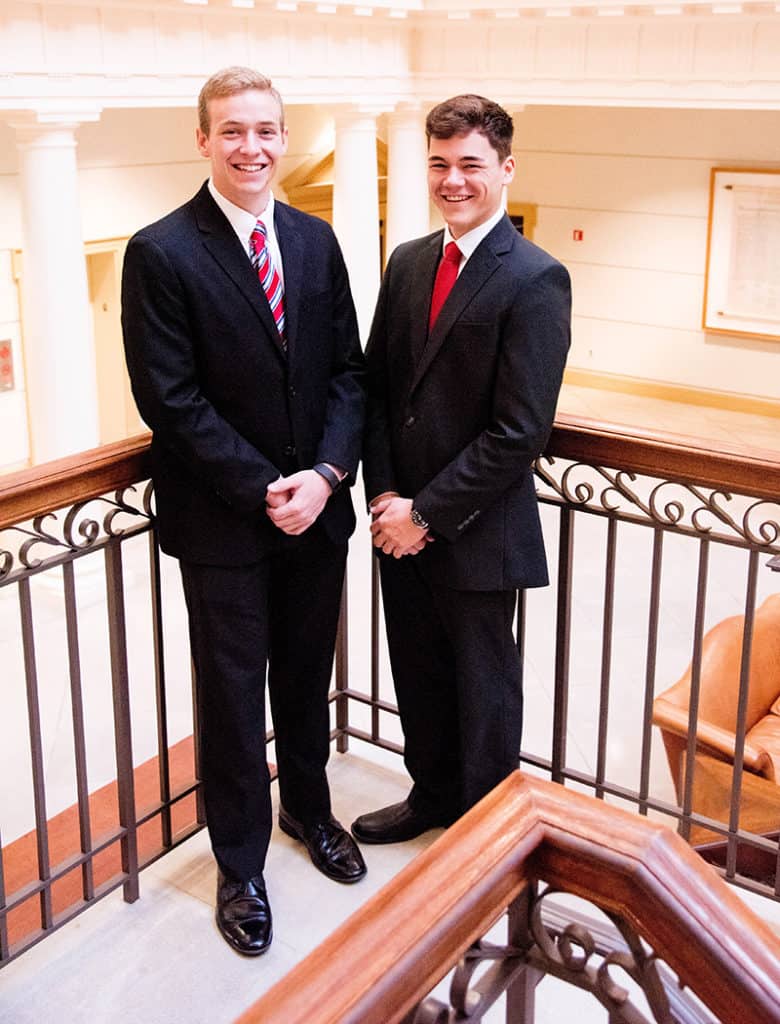
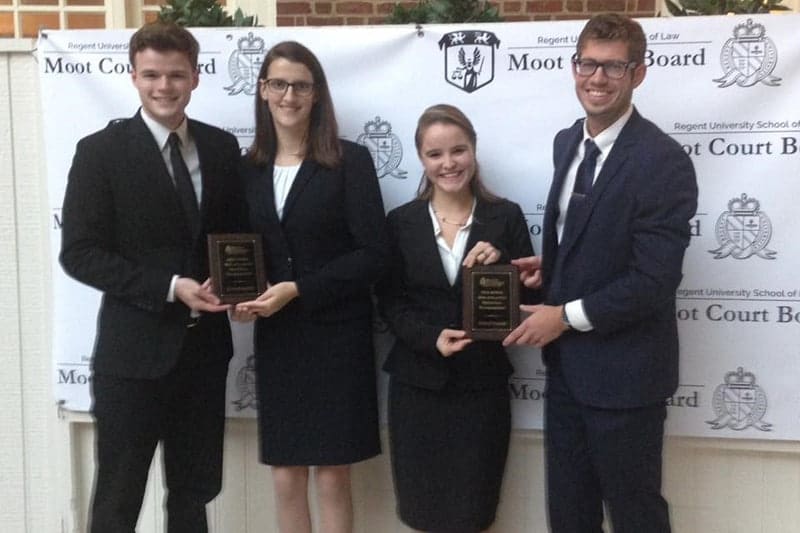
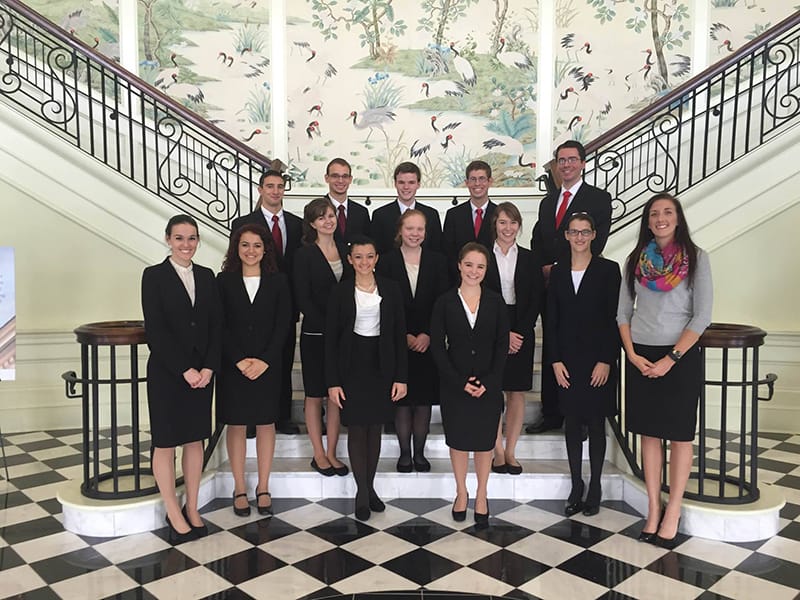
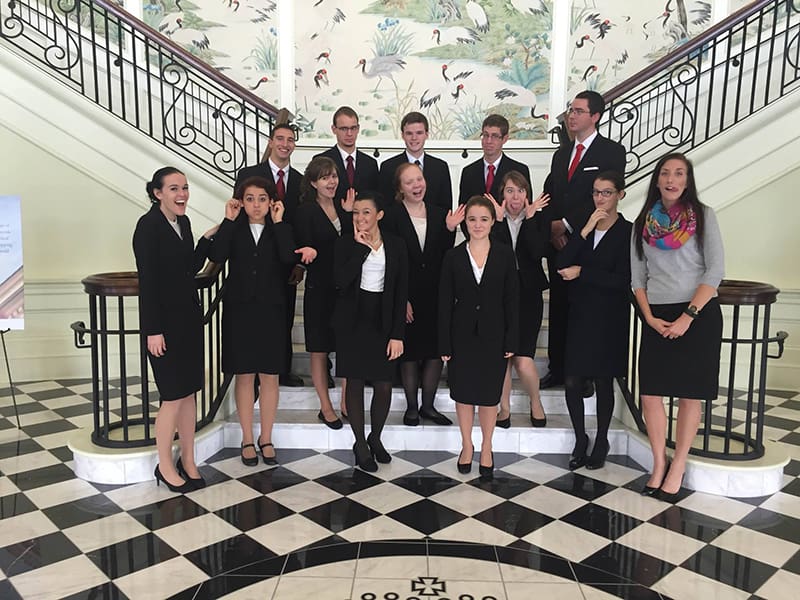
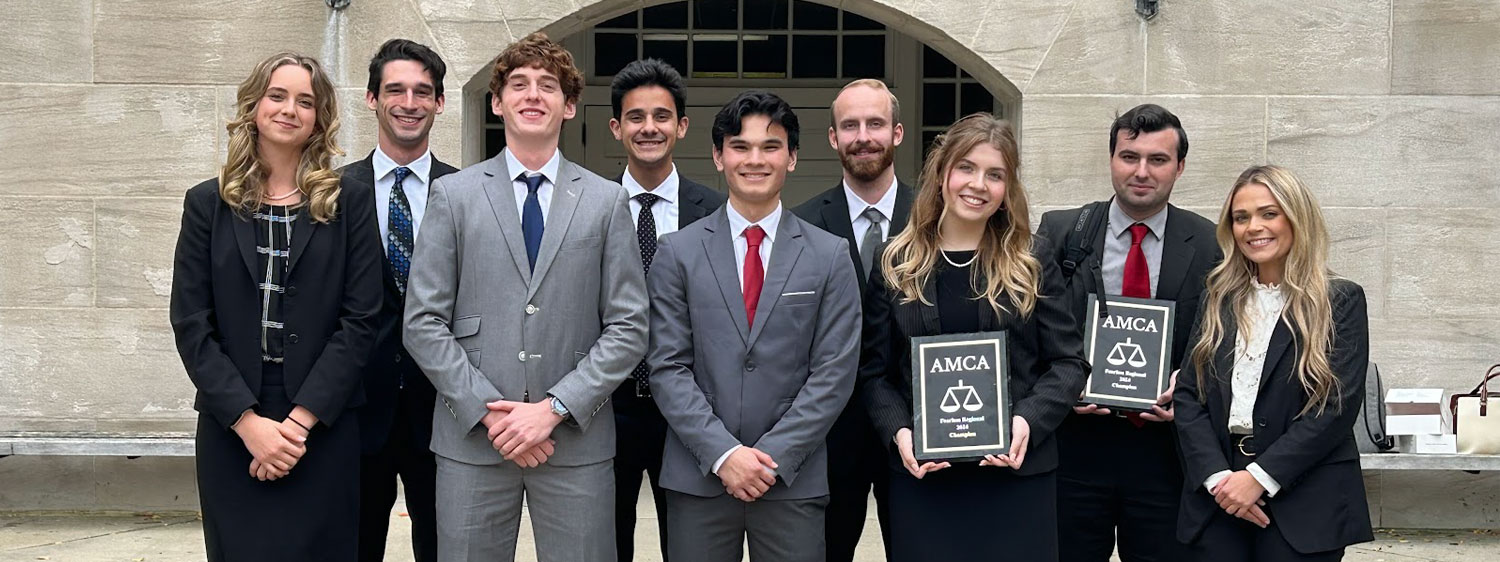
Welcome to the Regent Undergraduate Debate Association (RUDA), Regent’s premier undergraduate debate and Moot Court team! We compete in the American Moot Court Association, which currently ranks our team among the Top 20 in the Nation for Oral Advocacy and is nationally recognized as a program. In addition, we’re heading into our 3rd year of competing in The American Mock Trial Association.
To learn more about us, keep browsing our website or visit us on Instagram at @Regent_ruda. You can also email our faculty advisor, Professor Dan Koev, at dkoev@regent.edu.
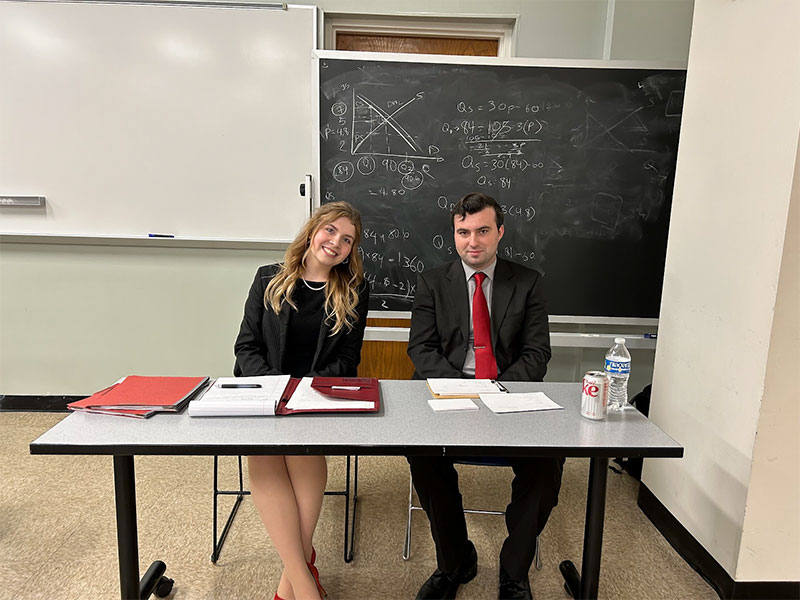
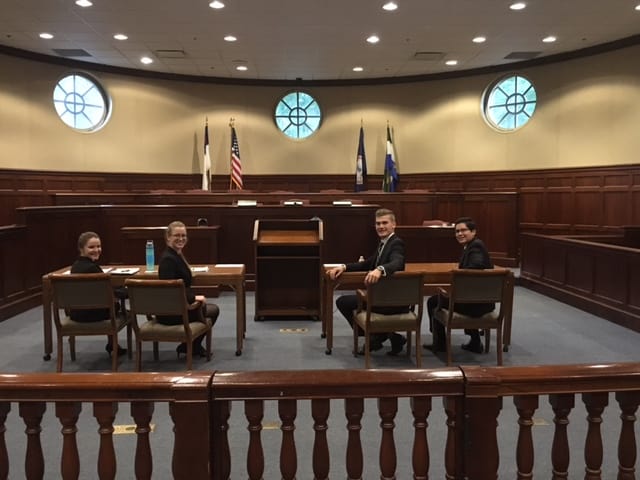
Moot Court is a competitive debate activity that simulates advocacy to the Supreme Court of the United States.
Each May, the American Moot Court Association (AMCA) releases a new Moot Court case problem for the upcoming year. The case problem provides a set of facts, two constitutional issues pertaining to the facts, and a list of Supreme Court and circuit court cases that address the two constitutional issues. With this information, debaters pair off into teams of two and prepare arguments for both sides of the case.
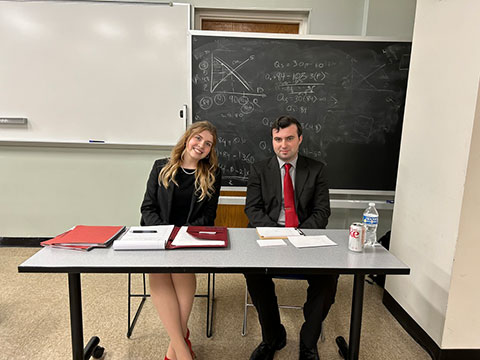
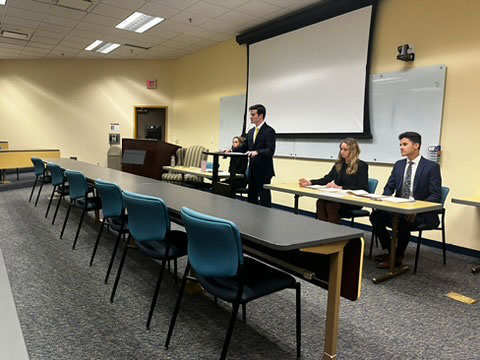
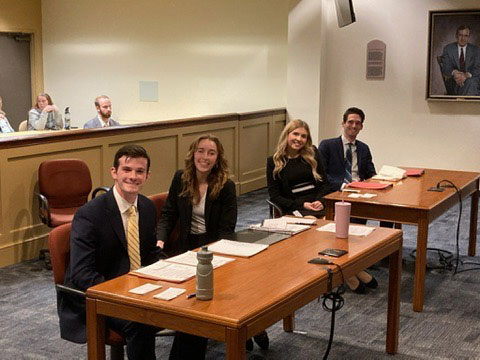
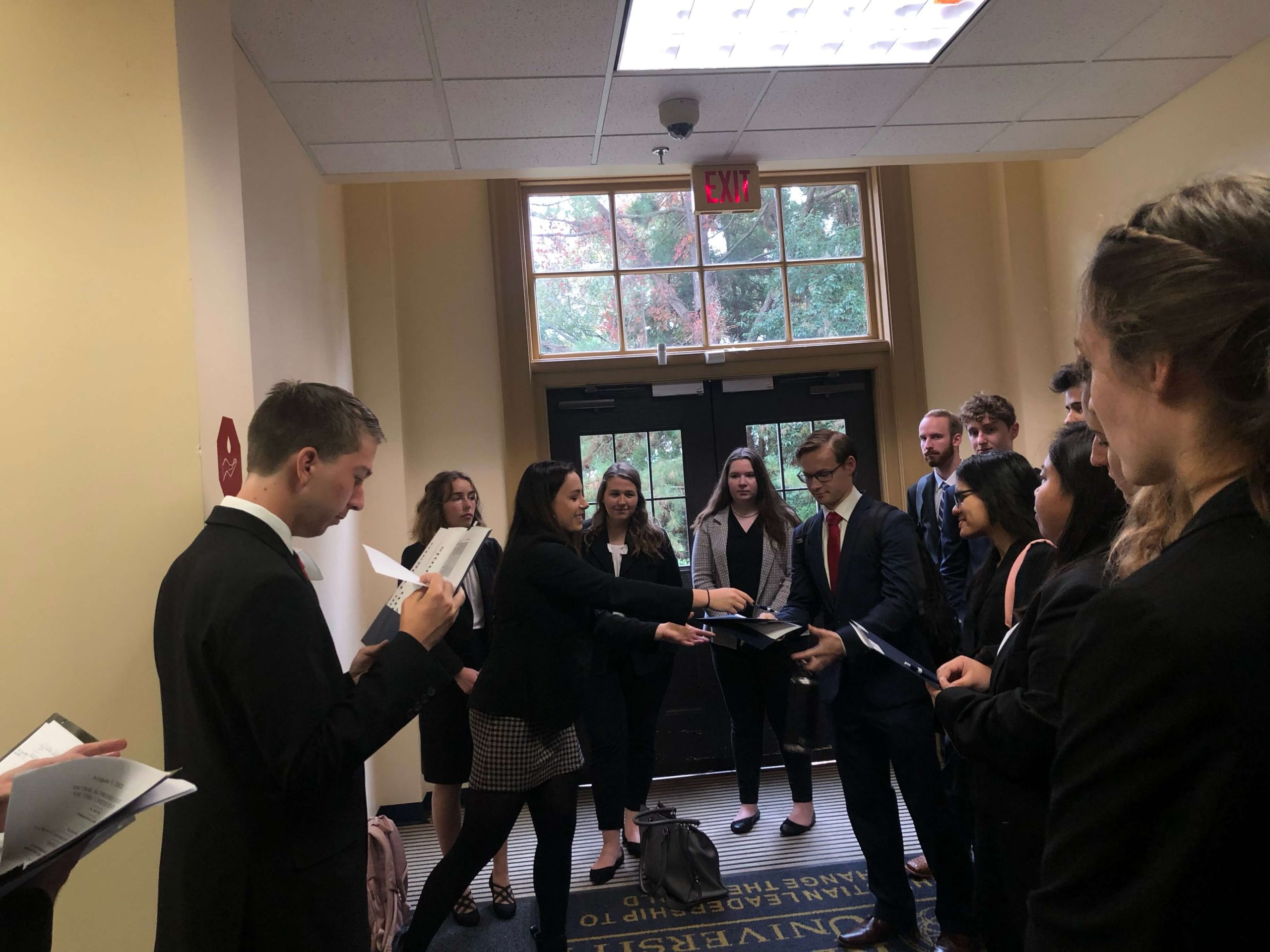
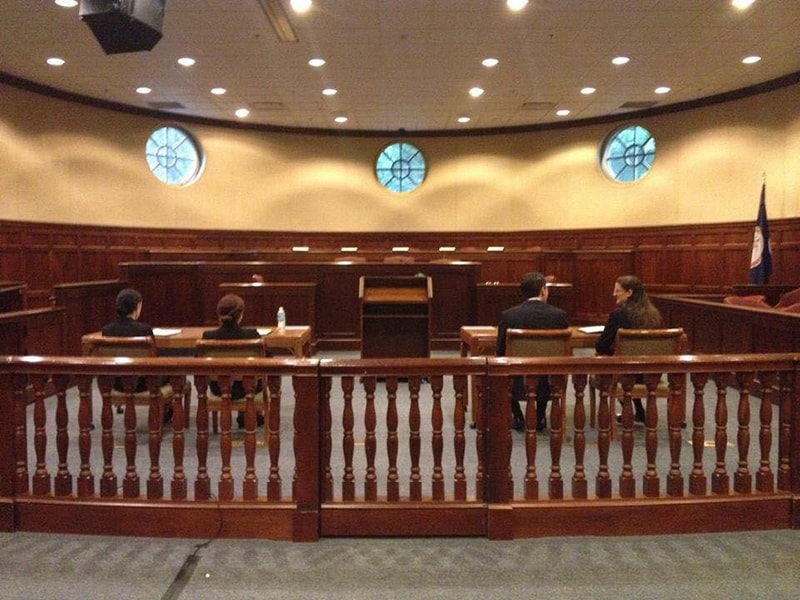
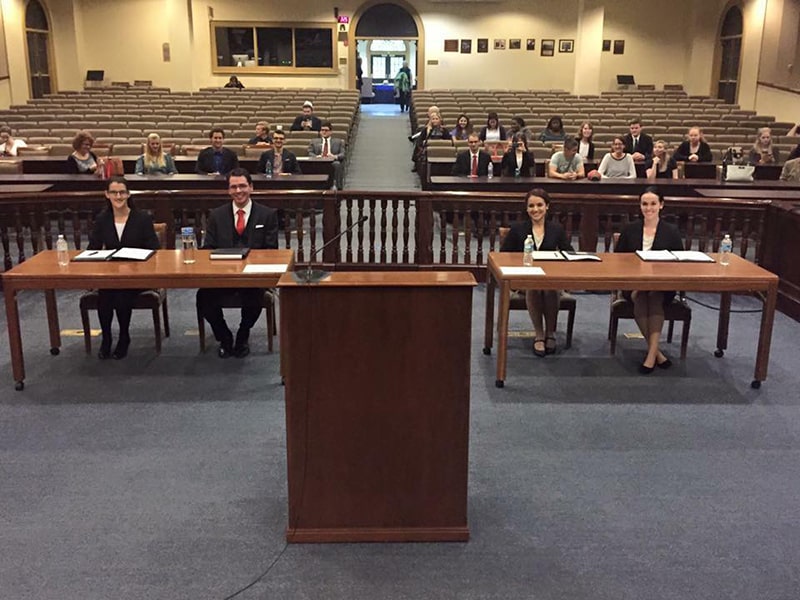
At regional and national competitions, teams face off against each other and present their arguments before a panel of judges.
- The petitioner team represents the side appealing to the Supreme Court
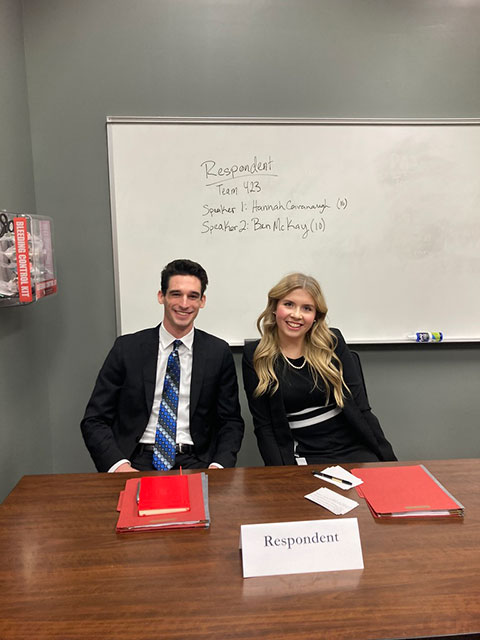
- The respondent team represents the side defending the lower court’s ruling.
As the debaters deliver their arguments, the judges can interrupt at any time to ask any question they want. At the end of the round, the judges decide the winning team based on which team presented the more compelling arguments.
Why Join Moot Court?
Moot Court is a fantastic activity for all students because it promotes strong public speaking skills, critical thinking skills, and healthy competition. It’s not just for Law or Government majors; in fact, some of our best competitors have studied Business, Christian Ministry, Cybersecurity, Psychology, History, and more. Regardless of their major, students who participate in Moot Court are greatly rewarded by their experience.
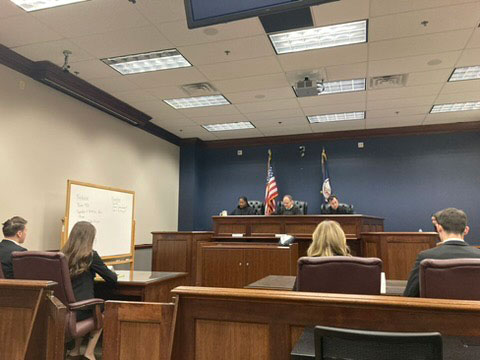
To watch a Moot Court round in action, check out this video of Regent Law students in competition.
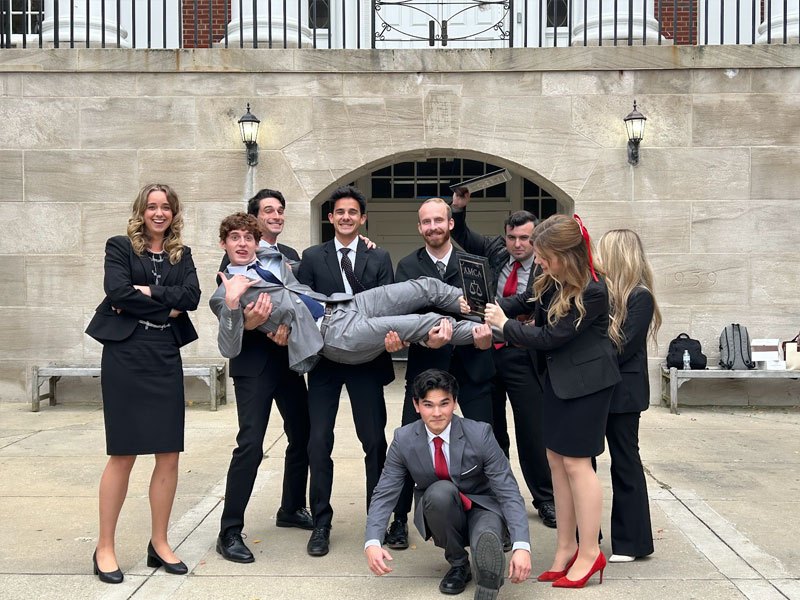
2024-2025 Season:
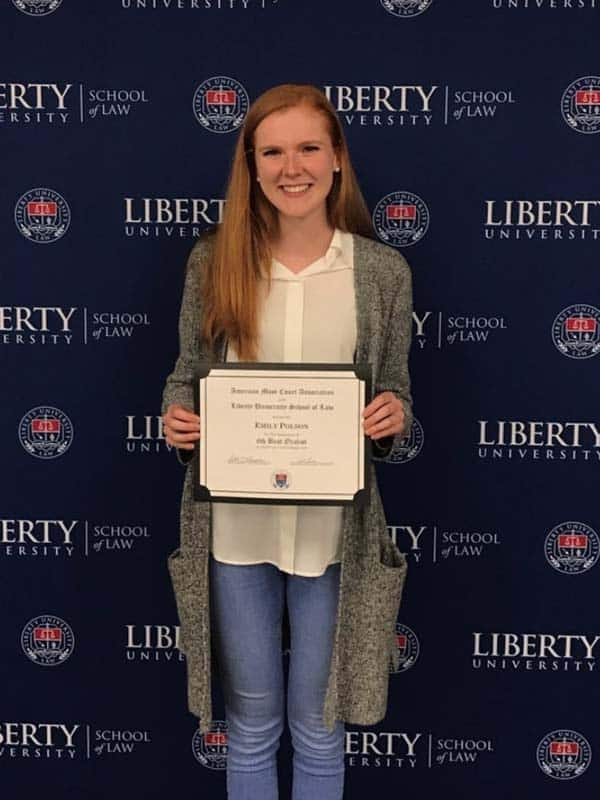
- 3rd Best Speaker, 5th Best Speaker, 6th Best Speaker – University of Maryland Fearless Challenge Oral Advocacy
- Octofinalists and Tournament Champions – University of Maryland Fearless Challenge
2023-2024 Season:
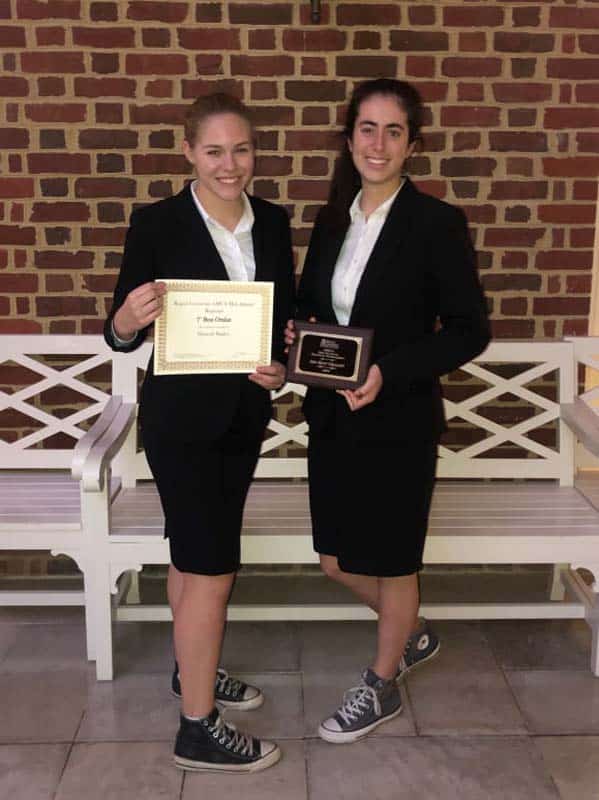
- 2nd Best Speaker, 3rd Best Speaker, and 8th Best Speaker – Midsouth Regional, Liberty University Oral Advocacy
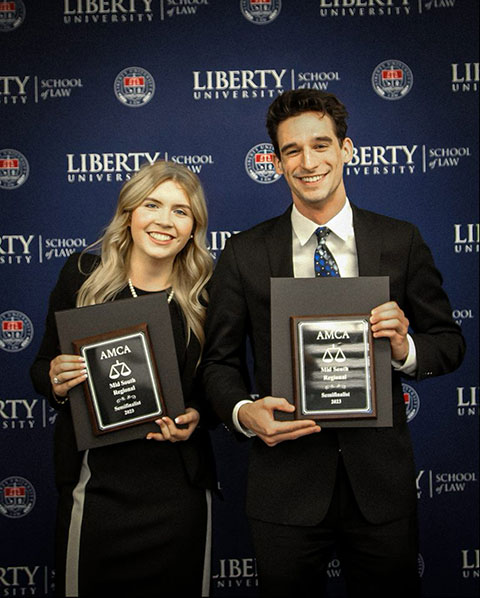
- Octofinalists, Quarterfinalists, and Semifinalists – Midsouth Regional, Liberty University
- 11th Best Speaker, 13th Best Speaker – Pre-National Competition, LSU Oral Advocacy
- Quarterfinalists – Qualified to the National Championship – Pre-National Competition, LSU
2022-2023 Season:
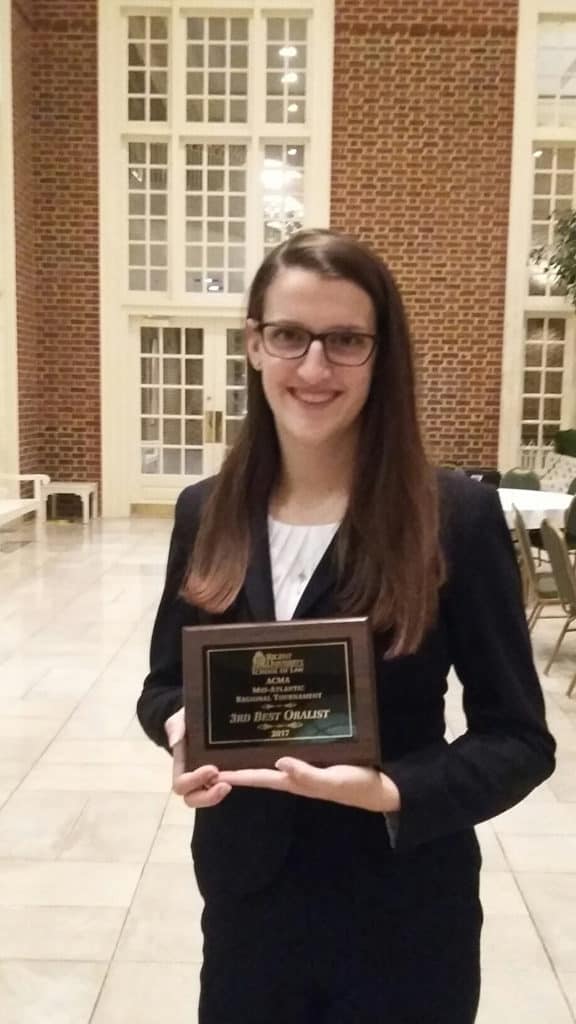
- Octofinalists, 2nd Best Speaker, 5th Best Speaker, 8th Best Speaker, 9th Best Speaker – Mid-Atlantic Regional Competition, Regent University
- Quarterfinalists – NOVA Regional Competition, Patrick Henry College
2021-2022 Season:
- 3rd Place, 4th Best Speaker, 16 Best Speaker – Sentinel Showdown Regional Competition, Patrick Henry College
- 15th Best Speaker, 24th Best Speaker – Texas Tech Regional Competition, Texas Tech
- 1st Place – Mid-Atlantic Regional Competition, Regent University
- 13th Best Speaker, 25th Best Speaker – AMCA National Championship Tournament
2020-2021 Season:
- Top 16, 1st Place, 1st Best Speaker, 4th Best Speaker, 5th Best Speaker, 6th Best Speaker, 7th Best Speaker – Mid-Atlantic Regional Competition, Regent University
- Octofinalist – Mid-South Regional Competition, Liberty University
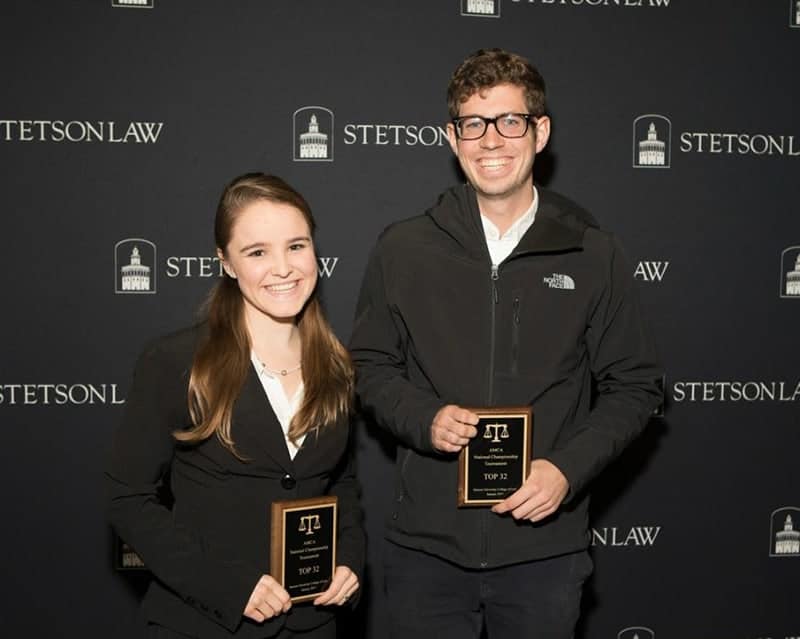
- Top 32, 4th Best Speaker, 14th Best Speaker, 6th Best Respondent Brief – AMCA National Championship Tournament
2019-2020 Season:
- Top 32 – AMCA National Championship Tournament, Baton Rouge, LA
- 3rd Place and 6th Best Speaker – Mid-South Regional Tournament, Liberty University
- 3rd Best Speaker and 6th Best Speaker – Mid-Atlantic Regional Tournament, Regent University
2018-2019 Season:
- Top 32 – AMCA National Championship Tournament, Orlando, FL
- 3rd Place, 4th Place, 5th Place, 1st Best Speaker, 2nd Best Speaker, 3rd Best Speaker, and 4th Best Speaker – Mid-South Regional Tournament, Liberty University
- 1st Best Speaker, 4th Best Speaker, 8th Best Speaker – Mid-Atlantic Regional Tournament, Regent University
2017-2018 Season
- 5th Best Speaker, Elite Eight, and Sweet Sixteen – AMCA National Championship Tournament, Dallas, TX
- 1st Best Speaker, 3rd Best Speaker, and Quarterfinalist – Mid-South Regional Tournament, Liberty University
- 1st Place, Quarterfinalist, and Top 10 Best Speaker – Mid-Atlantic Regional Tournament, Regent University
2016-2017 Season
- Top 32, AMCA National Championship Tournament, DeLand, FL
- 3rd Place, 4th Place, and Top 10 Best Speaker – Mid-Atlantic Regional Tournament, Regent University
2015-2016 Season
- Sweet Sixteen, Top 32, and Top 25 Best Speaker – AMCA National Championship Tournament, Miami, FL
- 1st Place, 2nd Place, 3rd Place, and Top 10 Best Speaker – Mid-Atlantic Regional Tournament, Regent University
2014-2015 Season
- 3rd Place – AMCA National Championship Tournament, Miami, FL
- 1st Place, Elite Eight, and Sweet Sixteen – Mid-Atlantic Regional Tournament, Regent University
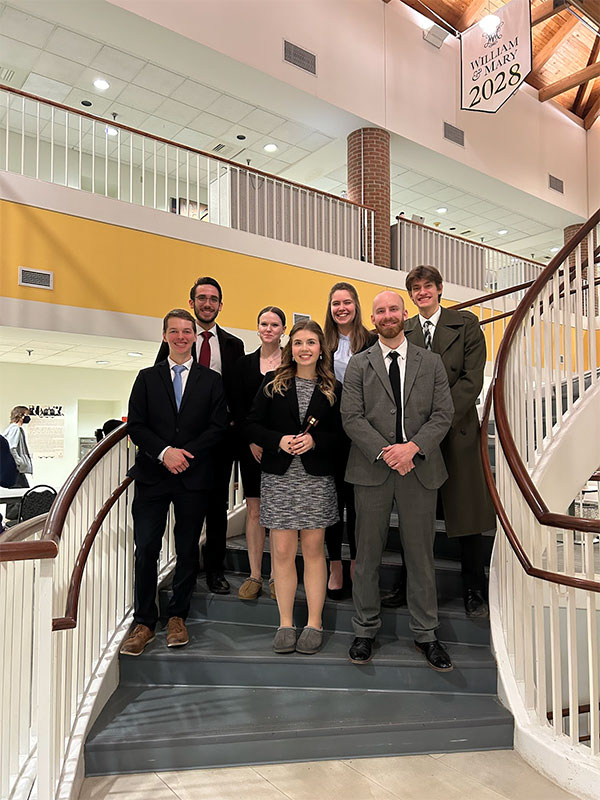
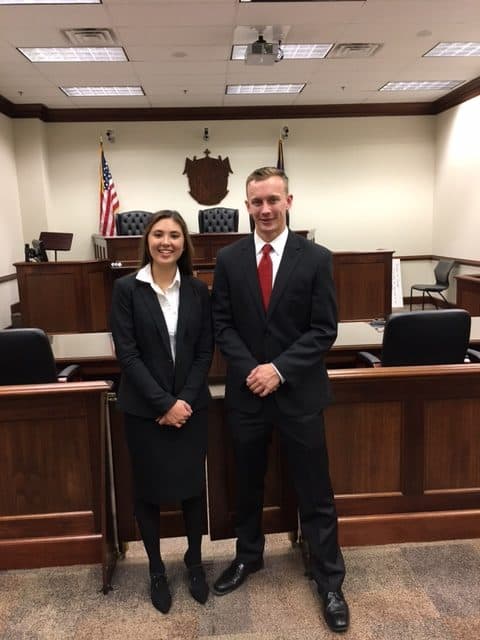
Mock Trial is a public speaking activity that showcases skills stretching from debate to theatre in the context of the American judicial system. Though, you need not have previous experience in either to join.
Each August, The American Mock Trial Association (AMTA) releases a case problem that could be about anything from a criminal murder case, to a civil defamation case.
A “mock trial” is exactly that. A fake trial being presented by people who are pretending to be real attorneys and witnesses. A team tends to be made up of anywhere between 6-10 people, and that team will portray the attorneys and lawyers representing both the Prosecution (or Plaintiff in a civil trial) and the Defense.
In a given round, one team will represent the prosecution and one team will represent the defense. Generally, one side is made up of three attorneys and three witnesses. The teams battle it out through opening statements, examinations, closing arguments, and objections based in the Federal Rules of Evidence.
Why Join Mock Trial?
Mock Trial is both fun and versatile. Whether you’re a theater major with a flair for the dramatics, a computer science major with an eye for detail, or a government major looking into trial advocacy, you will love Mock Trial. Lots of people have stage fright, but Mock Trial is an activity that can take people’s hesitancy towards public speaking and turn it into confidence that spreads to every part of that person’s life.
2024-2025 Season:
- Outstanding Attorney Award – William and Mary Regional Competition
Dan Koev, Ph.D: Faculty Advisor
Dr. Dan Koev is Department Chair and Professor of Government & Criminal Justice. He is passionate about teaching and researching comparative politics and international relations. He aims to synthesize a Christian ethical foundation with an empirical approach to studying political phenomena. Koev has taught international relations, comparative politics, contemporary global problems, American foreign policy, research methods, and senior seminars. Koev was born in Yambol, Bulgaria, and emigrated to the United States as a child. He became a naturalized American citizen in 2005. He is married with two children and enjoys reading, playing and watching soccer, cooking and spending time with his family.
Dr. Koev is recognized for working closely with students to help them grow and accomplish their educational and career goals, and he carries this into his work as Faculty Advisor for the Regent Undergraduate Debate Association.
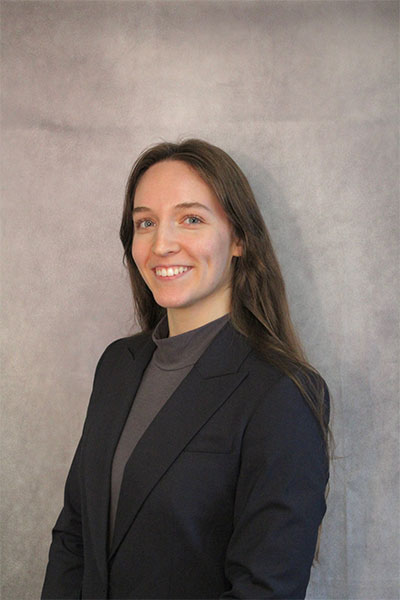
Arleigh Peterson: Coach
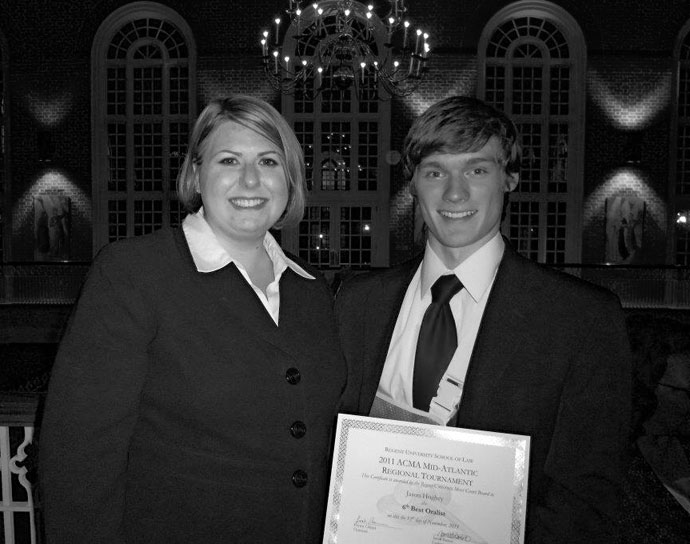
Arleigh Peterson is a third-year honors student at Regent University School of Law, where she serves as an executive member of the Moot Court Board. Arleigh has participated in forensics since high school and competed in moot court with RUDA during her undergraduate studies. During her second year of law school, Arleigh was a finalist in the Regent Cup competition, where she earned the Best Oralist award. She also represented Regent Law at the American Bar Association’s regional moot court competition in Philadelphia. Arleigh hopes to provide the students with the same experience she enjoyed in RUDA and looks forward to supporting them as they develop their advocacy skills.

Hannah Cavanaugh: President
Hannah is a senior studying American Government and Politics. She is heading into her 3rd season of competing in collegiate forensics this Fall, continuing her 6 years of experience from high school public speaking competitions. She was drawn to RUDA because of her previous experience, but she stayed for the friendly environment and incredible community. She is looking forward to welcoming new friends onto the team. If you’re interested in Constitutional law, trial law, public speaking, or even just arguing, RUDA is the place for you! For more information about RUDA, Moot Court, or Mock Trial email Hannah at hanncav@mail.regent.edu.
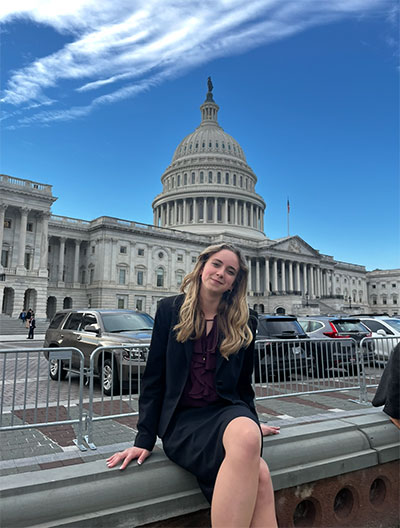
Zoe Abbott: Vice President
Zoe is a junior studying government & accounting and is entering her third year of RUDA. She competed in public speaking, moot court, and mock trial in high school and continued to do so through college. Participating in RUDA has been one of the highlights in Zoe’s time at Regent. It’s allowed her to be a part of a really great community as well as continue to develop her advocacy and courtroom skills. Zoe is super excited to see what the upcoming year holds and work alongside everyone!

Madelyn Sutphin: Secretary
Madelyn is currently a senior studying government. Last year was her first year in Moot Court and she is so excited for the upcoming year! She is thankful for the ways that moot court has grown her, both as a speaker and a person. She is looking forward to competing and getting to
know everyone on the team this fall!

Katherine Hunnicutt: Mock Trial Coordinator
Katherine is a Psychology major, who is excited to begin competing with RUDA. Participating in Mock Trial has impacted not only her public speaking skills, but her personal speaking skills. She feels that competing in Mock Trial has grown her community for the better, and she invites Regent students from all backgrounds and majors to join this wonderful team.

Nathaniel Olson: Mock Trial Logistics Coordinator
Nathaniel is a junior studying Government, and has loved competing with the RUDA Mock Trial team for the past two years. During his experience with the team, he has enjoyed growing in public speaking and critical thinking skills. One thing Nathaniel loves about RUDA is that it provides a creative and fulfilling space that anyone could enjoy. Nathaniel looks forward to growing more this year, and is excited to join and further build a God-honoring and welcoming team!

Jason Delgado: Treasurer
Jason is a senior studying Government and minoring in History. He started competing in Moot Court his freshman year and has been competing since, with this being his fourth year in RUDA. He has enjoyed RUDA immensely, having joined it for the opportunity to study constitutional law in depth and hone his public speaking skills, as well as the wonderful community. Jason is very excited to work with returning and new members and looks forward to a wonderful year and everything the Lord has in store for RUDA.

Rachel Helms: Events Coordinator
Rachel is a sophomore studying Government with a concentration in Pre-Law. Her freshman year was her first year participating in Moot Court and Mock Trial, and she is excited to do it again this year. RUDA provides a great way to build up your public speaking skills, and offers a Christ-centered community. She is excited for this upcoming season and is looking forward to working with everyone on the team to help RUDA grow.

Joseph Lin: Social Media Manager
Joseph is a junior studying film and television. He prefers to be behind the camera after five years of competing in various debate formats and moot court, but he is always eager to share what he has learned about public speaking. This year he is excited to capture and promote RUDA’s events on social media!

When I arrived at Regent’s beautiful campus starry-eyed at the world of possibilities, I had no clue how to find friends, build my resume, or grow academically. This all began to change once my professor talked to me during orientation about a club that he oversaw. Since I was a government major, I thought that this was simply going to be an easy debate tournament that would make me look better on law school applications. “This is going to be easy,” I thought to myself. “This will just be a stepping stone–get in and get out.” Being homeschooled, I was naturally the first in my class, so I began my college experience thinking that I knew it all. After being torn to shreds during my first practice with my argument, I had been humbled. I finally learned to accept help from others, recognize that some people know more than I did about certain things, and that teamwork is essential to success.
Once I had accepted reality, wonderful things happened because of RUDA. I was actually able to improve my written, oral, research, and interpersonal skills critical for the workforce after college. However, RUDA is not just about the practical experience, but the social one as well .The relationships formed through moot court have been among my strongest in college, and I could not be thankful enough to work with such talented and down-to-Earth people. I could not recommend joining this amazing organization enough. It will push you in ways that you never imagined, but is that not the reason we go to school in the first place?

After my first Moot Court argument left me frustrated and discouraged, I assumed that it was simply too late in the game for me to start such a foreign activity – it was my junior year of college and my main extracurricular up until that point had been orchestra. However, after a lot of prayer, I decided to give it a shot for a month. Spoiler alert: I ended up staying, and I am so thankful that I did. I quickly became engrossed and, slowly but surely, I began to understand exactly how Moot Court worked. I began to take pride in what I was accomplishing and eventually found myself able to fill the allotted time with my argument, answer the judges’ questions, and use the case law to back up my points, all things I never would have believed I could do after the first practice.
Even if you have never done debate before, there are many people (especially your coach and veteran team members) who want to help you succeed. Though it is not easy, I cannot speak highly enough about it. It drastically improved my public speaking ability, helped me learn to develop arguments, and even provided a great social outlet. Moot Court shaped my Regent experience because of what I learned, the experiences I had, and the people I came to know and love. I highly recommend that anyone with any interest in debate check it out because it is something that can benefit everyone.

For those that don’t know what RUDA is, and more specifically moot court, I would simply say that it is a group that practices a form of debate, moot court, which provides indispensable skills to those who are members. The decision to join RUDA was one of the best decisions that I made as an undergraduate. I learned how to hone my public speaking skills, research topics that I was not familiar with, and make friends that I shared great experiences with. Another great aspect of RUDA is the effort put into it by all that participate, especially the coaches. This is borne out by the fact that RUDA has a great history in the regional and national moot court competitions. It was a great honor to be part of such a special organization. The only regret that I have about RUDA is that I did not participate in it my entire time at Regent.

I joined RUDA in the fall of 2013. I was not exactly sure what to expect, having never done debate before, but I was quickly able to find a groove and go with it. Prior to this, I never really had much public speaking experience, but I did have my critical thinking skills and worked very hard on knowing the issue inside and out each season. My work paid off as my partner and I went to the national tournament in 2013 and again in 2016. It’s an experience I will not soon forget.
I had three years of time in RUDA and learned things that no class could have taught me. First, it fine-tuned my critical thinking skills. Second, it greatly improved my public speaking skills. The experience helped me to think quickly and to formulate responses to all sorts of outlandish questions on the spot. These skills are only gained through experience, and the time I spent with RUDA is arguably the most important investment I made at Regent. In short, this experience is invaluable. If you really want to learn how to formulate solid arguments and present them in a tough forum, look no further than RUDA.

Although I joined Regent’s moot court team without any prior experience in formal debate, I (more than most, perhaps) was confident that I had a clear idea of what to expect: several of my friends were moot court alumni or active members, and I had seen them huddled in the backs of computer labs and library nooks with their thick binders full of printed case law. I knew that moot court would push me intellectually in ways no other college activity could, which is why I—an English major intimidated by a world of rulings and regulations—showed up to the interest meeting in the first month of my senior year steeled for an incredibly taxing experience.
I couldn’t have been more misguided. Moot court has given me far more than it has taken from me; it was the single most encouraging and freeing experience of my last year of college. My one year learning the ins and outs of legal debate provided me with more critical reading skills, meaningful motivation, public speaking confidence, and genuine companionship than I could ever have expected. And there’s nothing quite like the rush of a debate tournament—in what other setting can you argue in front of law students one second and grab Slurpees with friends in formal business attire the next?
In its own way, moot court taught me to appreciate some of the best things to come of my undergrad experience: diligence, sound research skills, and the company of good people. I’m thankful for the brief time I had participating in it, and I highly recommend it for any and all students.
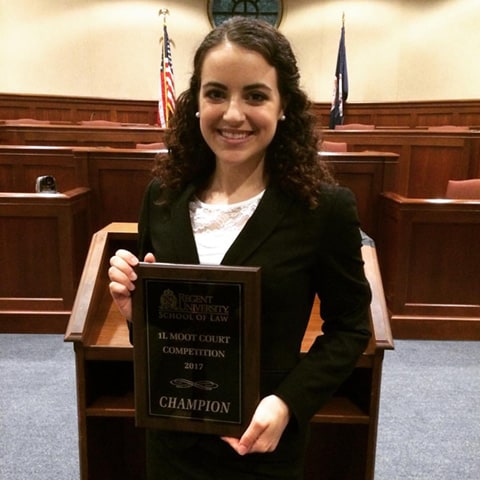
Being homeschooled my entire life, I never had the opportunity to join a debate team until I came to Regent. I knew that I because of my desire to become a lawyer, learning the art of Moot Court and Mock Trial would be incredibly valuable. Little did I know how valuable. The process of forming a good argument that has relatively no flaws is difficult, but not impossible. Finding support for your argument is much like a treasure hunt. As I learned the technique of creating arguments off of a problem and its supporting cases, I realized that this would be helping me in my writing of papers for classes. Reasoning skills are also highly important as we are constantly attacked with arguments against our faith. As Christians we are to “Always be prepared to give an answer to everyone who asks you to give the reason for the hope that you have. But do this with gentleness and respect” (1 Peter 3:15). Overall, joining RUDA requires dedication and hard work, but when one understands and values the experience they will be walking away with, it is well worth it and quite rewarding.

Growing up in New York State, many of my friends, acquaintances, and teachers were communists, fascists, socialists, environmentalists, homosexuals, drug addicts, atheists, Buddhists, agnostics, or a combination of those described. Often times in High school, I found myself debating and arguing with those around me, as I felt they had very little clue of what was actually true about the world around us. With that, I found myself wishing to go to law school, as the idea of arguing with others for a living excited me beyond belief.
That being said, when I entered college, I was a very shy, quiet, and slightly insecure person. I tried to avoid public speaking and large amounts of attention whenever possible. When I went to the club fair that August, however, I stumbled across the Debate team table. Though I had no intention of joining it, I had mentioned it to a couple of friends back home. Everyone I told this to stated that there was no way I would join, or, if I did, I would fail miserably. Having the type of personality that likes to prove others wrong, I ultimately decided to join.
Though I originally joined as an act of rebellion, what I got out of my first year on the team is more than I had ever dreamed possible. As this was my first experience with any type of formal debate, I really had no idea what to expect. What I found was a group of very intelligent and thoughtful people who enjoyed the law scene as much as I did. This club ultimately helped me decide that law school was where I needed to be, in addition to preparing me with the skills it will later take to become a successful lawyer. Through this group, I was shown what practicing law would really be like. It helped me eradicate my fear of public speaking, in addition to helping me build up my self-confidence. The leaders are incredibly accommodating in helping students hone their skills, and the students in the group are very supportive of each other. What I have gotten out of this group was much more than I had bargained for, and I will treasure the skills and relationships I have made through this club forever.

I did not have the opportunity to debate in any official fashion during my high school years, but when I came to Regent I decided to join Regent’s debate team. I jumped right in last semester and immediately perceived the value of this activity.
Like anyone else, I saw this as a way to boost my resume and give me experience for graduate level academics, yet debating at Regent soon starting meaning far more than that to me. I thoroughly enjoyed myself practicing and participating in the regional tournament for Moot Court we entered into in last semester. I loved the experience, and I am now largely involved in Regent’s debate team.
Do not be of the mindset that only government major should pursue this opportunity; rather, see it as a place to learn and prepare for the future, as well as, develop essential analytical and communication skills. The time and effort put into this is rewarding and enjoyable.
We have a superb coach for our team to teach and guide us. You will not be lost if you are new; instead we will walk you through step by step the process of debating. Do not worry if you have no experience in this field; I didn’t, yet here I am!

I was a debater in NCFCA for seven years. Coming to college, I wondered whether I would get anything new from doing debate at Regent. After all, at the college level debate is more for government majors and those who are pre-law, right? As a Psychology major I doubted whether or not there was a place for me. I decided to go to the interest meeting anyway, and I am so glad I did. It was very exciting (and slightly nerve wracking) to learn about a new form of debate. I got swept away into the world of Moot Court: Supreme Court cases, brief writing, argument development, and presentation. It was a crazy and fun ride that landed me on a plane with my coach and partner on my way to Nationals at Chapman Law School in California.
There are so many reasons and benefits of joining the Regent Undergraduate Debate Association. Initially, doing debate taught me to think and speak, important qualities in any profession. Eight years of debate later, it would be impossible to create a comprehensive list of the benefits of debate. Instead, I have put together my top ten reasons to join the club:
- Develop critical thinking skills
- Develop public speaking skills
- Learn to think on your feet
- Improve reading speed and comprehension level
- Improve logical reasoning & analysis
- Learn to develop strong arguments
- Achieve professionalism
- Compete against colleges across the country
- Learn about interesting topics
- IT’S FUN!

The benefits of participating in forensics and debate are myriad. Whether one studies business, government, communication, history, or any other field, debate provides essential critical thinking skills that can have a profound influence on one’s academic and professional success. Thus, the Regent Undergraduate Debate Association is available to students of all academic disciplines and offers an interactive way to improve one’s self-confidence, public speaking, and critical thinking.
Because our club presently emphasizes Moot Court, it is important to understand that, even if one is not interested in pursuing law, the aforementioned benefits apply to participation in this form of debate. Moot Court requires critical analysis of many real court cases with serious historical and social implications. Furthermore, that analysis demands that students understand the critical “tests” present within each ruling and apply those tests to other situations. Thus, students engage the underlying theory of a past decision and make it applicable today.
Also, competitors defend their cases in front of panels of challenging justices all wishing to uncover any logical or legal inconsistencies. Job interviews, professional presentations, classroom debates, and other similar circumstances require the same sharp and immediate responses. Moot Court equips the competitor with applicable skills to help in these, and other, important contexts.
Moot Court also teaches students to work through wordy and massive legal briefs and cases in a short amount of time and to extract the necessary facts. As such, it serves as a practical teacher of necessary speed reading skills that can help any aspiring academic to tackle the heavy workload of college classes. Similarly, breaking down cases to uncover needed facts teaches students to become brief but mighty with their word choice. Paper writing easily becomes more deliberate as competitors learn the value of prudently selecting each word.
With all of this in mind, the debate competitor becomes equipped for present studies and future careers. Attending graduate school, landing a great corporate job, or entering a career of policy or legal analysis are all natural next steps after a solid career of college debate. As such, we welcome any and all interested competitors to learn with us, speak with us, and glorify God with us.